 Egypt
Heading to Luxor Temple? Luxor Temple is a large ancient Egyptian temple complex on the east bank of the Nile in Luxor, built primarily by Amenhotep III (c.1390 BC) and Ramesses II, connected to Karnak by the 3km Avenue of Sphinxes. This guide covers what it costs, opening hours, the best months to go, how to get there and practical tips.
At a glance
- Entry
- EGP 260 (USD ~5) · Night visit included
- Opening hours
- 6 AM – 9 PM daily
- Best time
- November to March
- Location
- East bank, Luxor, Upper Egypt
What to expect at Luxor Temple
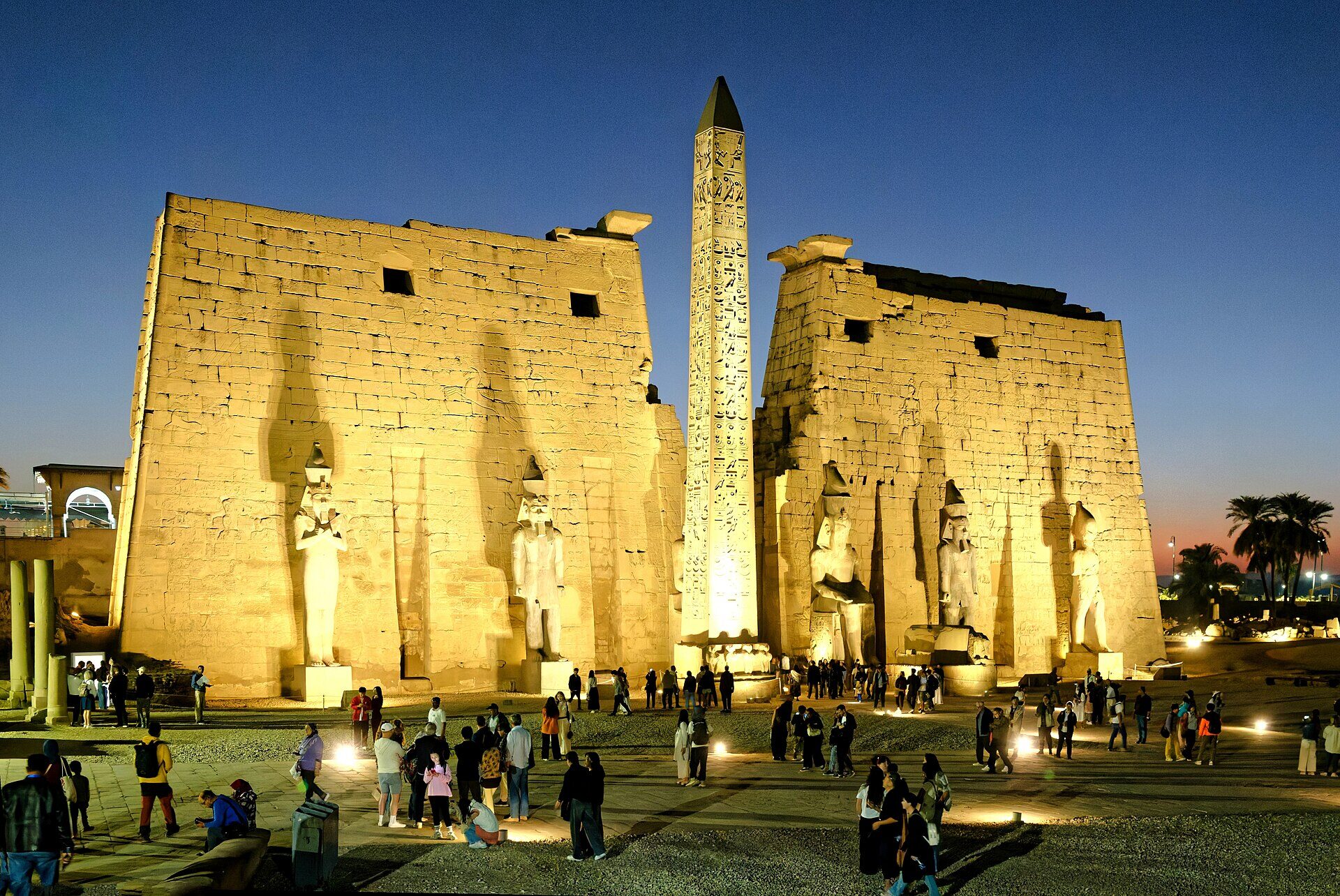
Luxor Temple (Ipet Resyt, 'Southern Sanctuary') is one of the top surviving temple complexes of ancient Egypt, a structure begun by Amenhotep III (about 1390–1352 BC) and completed over subsequent centuries by Ramesses II, Tutankhamun and later pharaohs, standing on the east bank of the Nile in the centre of the modern city of Luxor, its entrance pylons facing directly north toward the Karnak complex 3km away along the ancient Avenue of Sphinxes.
Unlike Karnak (which was the temple of Amun-Ra, the dominant state deity) it was specifically associated with the rejuvenation of the pharaoh. The place where the royal ka (divine spirit) was annually renewed in the Opet Festival, when the sacred barques of the Theban Triad (Amun, Mut and Khonsu) were carried in procession from Karnak to Luxor along the sphinx avenue.


Avenue of Sphinxes
The Avenue of Sphinxes (Tariq el Kebash) connecting it to Karnak was one of the great processional ways of the ancient world, originally 3km of sphinx statues (about 1,350 human-headed sphinxes replacing an earlier ram-headed sphinx avenue) lining the ceremonial road between the two temples. The avenue was buried under the modern city of Luxor for centuries and excavated progressively from the 1950s to 2021, when the official reopening of the complete avenue (with a dramatic evening ceremony) reconnected the two temples for the first time in 1,600 years.
Besides, the full 3km processional walk from its northern entrance to Karnak's southern gate, along the newly excavated sphinx avenue, is now one of the top architectural promenade experiences in Egypt.
Entrance pylon of Ramesses II
The entrance pylon of Ramesses II is the temple's most dramatic monument, a gateway of two towers originally 24 metres high (one standing, one partially collapsed) decorated with Ramesses's military campaigns including the Battle of Kadesh, flanked by six statues of Ramesses (two standing, four seated, two now in the Louvre and Turin museums) and originally preceded by two obelisks of red Aswan granite. One obelisk still stands at the pylon's entrance.
The other was given to France in 1833 and now stands in the Place de la Concorde in Paris. Moreover, the standing obelisk (25 metres) is engraved on all four faces with texts praising Ramesses's military achievements and divine favour, the top of the surviving Luxor obelisks in situ.
Colonnade of Amenhotep III
The Colonnade of Amenhotep III, 14 columns of papyrus-bud capital form, each 19 metres tall, standing in two rows of seven, is one of the most powerful architectural spaces in Egypt, the columns rising to their original height and the roof gone, so the blue sky serves as a ceiling above the processional corridor. Painted reliefs on the colonnade walls (now faded but still decipherable) record the Opet Festival procession in a continuous narrative sequence that gives the most detailed surviving account of the annual renewal ceremony of the New Kingdom pharaohs. The light in the late afternoon (about 4–5 PM) rakes along the colonnade wall reliefs and enhances their legibility considerably.
Roman chapel
Besides, the Roman chapel embedded within the temple's innermost sanctuary, where the Third Century AD legionaries of the Roman garrison converted the innermost sanctuary of Amenhotep's temple into a shrine of the Roman imperial cult, plastering over the Egyptian wall paintings and painting Roman imperial frescoes on top, is one of the most vivid physical encounters with the layered history of Egyptian temples. Also, the Roman plaster has partially fallen away in places, revealing the original Egyptian painting beneath.
In other areas, both layers are visible simultaneously. The later conversion of the temple's forecourt into a mosque (the Abu el-Haggag Mosque, still in active use, accessible by a bridge from the temple's main forecourt) added a third religious layer to a site already carrying 3,400 years of continuous religious function.
It is open daily 6 AM–10 PM (entry about EGP 160). The evening visit (from about 7 PM after the temple is illuminated) gives the top atmosphere. The floodlit columns against the dark sky are remarkably dramatic, the crowds thinner than the daytime visit, and the temperature comfortable year-round. Combining it with a morning Karnak visit and an evening return to Luxor gives the ideal Luxor single-day itinerary.
Luxor Temple tickets and prices
Here is what a visit to it costs. Prices are per person unless noted. Because they change with the season, treat them as a guide.
| Ticket or service | Price |
|---|---|
| It entry (day and night) (Open until 9 PM · Night visit included · No extra charge) | EGP 260 (USD ~5) |
| Ticket or service | Price |
|---|---|
| Egyptian nationals (discounted) (Egyptian ID required) | EGP 30 |
| Ticket or service | Price |
|---|---|
| Karnak Temple Complex (3km north · Avenue of Sphinxes connection · UNESCO) | EGP 360 |
| Felucca Nile sunset cruise (Luxor) (Traditional sailing boat · 1 hour at sunset) | EGP 150–300 |
| Licensed Egyptologist guide (Luxor + Karnak) (Full day · Ministry licensed) | USD 50–100 |
| Karnak Sound and Light Show (Evening · Most spectacular in Egypt) | EGP 300–400 |
ℹ Prices in Egyptian Pound (EGP) . Confirm rates before visiting.
How to get to Luxor Temple
These are the easiest ways to reach it, with typical costs and times.
Walk from central Luxor hotels
It is on the Corniche (river road), walking distance from almost all central Luxor hotels.
Calèche (horse carriage) from hotel
Traditional horse carriages operate throughout Luxor. Negotiate price before boarding.
Fly to Luxor Airport (LXR)
Luxor Airport has domestic connections from Cairo (1 hr) and some international flights from Europe.
Best time to visit Luxor Temple
The best time to visit it is November to March. April to May and September to October also work well if your dates are fixed.
- Jan
- Feb
- Mar
- Apr
- May
- Jun
- Jul
- Aug
- Sep
- Oct
- Nov
- Dec
BestGoodFairAvoid
(Oct–Apr: 15–28°C) · Good (May, Sep) · OK (Jun–Aug: 38–42°C)
Tips for visiting Luxor Temple
These tips make a visit to it easier, especially if it is your first time.
Evening Visit Is the Best Version
It between 7 and 9 PM, dramatically lit, crowds minimal, the Nile breeze cooling, is one of the top archaeological evening experiences in Egypt. The carved reliefs appear more vividly in artificial light than in flat daytime sun.
Walk the Full Avenue of Sphinxes
In general, the 3km Avenue of Sphinxes (completed 2021) from it to Karnak can now be walked in full. Allow 45 minutes one way. In fact, the processional approach to Karnak along the avenue of 1,350 criosphinxes is rare.
Combine Luxor and Karnak in One Day
Morning Karnak (8–11 AM, EGP 360), walk Avenue of Sphinxes, lunch, rest during midday heat, evening it (6–9 PM, EGP 260). This order gives the best light at each site.
Sunset Felucca Then Evening Temple
A 1-hour felucca (EGP 150–300) on the Nile at sunset, watching the west bank cliffs turn gold while drifting past the temples, followed by the it evening visit, is the top Luxor day.
Find the Abu Haggag Mosque Inside the Temple
Besides, a functioning mosque has been built over the pharaonic floor level inside the temple. The mosque floor is 3 metres above the original ground. Looking down from the mosque level reveals the pharaonic reliefs beneath.
Avoid Midday in Summer
Luxor in July–August reaches 42°C. In addition, the temples have no shade. Visit between 8–11 AM and 5–9 PM only in summer. November–February is the ideal season.
Where to stay near Luxor Temple
If you want to stay close to it, start with these hotels. Rates are rough nightly guides, so check before you book.
Marriott Mena House (Giza) ★★★★★
USD 200–500/nightGiza Plateau, Pyramid views from rooms
The top hotel position in Egypt, within the Giza Plateau compound with Pyramid views from the pool and many rooms. Historic 1869 palace.
Sofitel Legend Old Cataract (Aswan) ★★★★★
USD 250–600/nightAswan, Nile and Elephantine Island views
One of Africa's great historic hotels, Agatha Christie wrote here, the terrace overlooks the Nile and the Aga Khan Mausoleum. Rare atmosphere.
Steigenberger Nile Palace (Luxor) ★★★★★
USD 100–200/nightLuxor, Nile frontage, 10 min to Temple
Top Luxor hotel with Nile pool views. Central location for Luxor and Karnak temples.
Nefertiti Hotel (Luxor) ★★★
USD 25–60/nightLuxor city centre
Best value hotel in Luxor, clean rooms, good breakfast and rooftop terrace with it view. Popular with independent travellers.
Arabian Nights Hotel (Cairo) ★★★
USD 30–70/nightCairo near Egyptian Museum
Reliable budget option in central Cairo near the Egyptian Museum and Tahrir Square.
Luxor Temple: frequently asked questions
How much does Luxor Temple cost?
Entry EGP 260 (about USD 5). It is open until 9 PM daily. The night visit (when the temple is dramatically lit) is one of the top experiences in Luxor and included in the standard entry price.
What is the Avenue of Sphinxes?
A 3-kilometre processional avenue of human-headed sphinxes (criosphinxes) connecting it to Karnak. Completed 2021 after decades of excavation, walking the full avenue is now possible and rare.
Is Luxor Temple connected to Karnak?
Yes, the 3km Avenue of Sphinxes connects the two temples. The Avenue was completed in 2021 after a major restoration project. Both temples are included in separate tickets.
What is the best time to visit Luxor Temple?
Evening (6–9 PM) when the temple is floodlit and the daytime crowds have left. Moreover, early morning (8–9 AM) is the second-best option. Avoid midday November–February when tour groups concentrate.
What are the opening hours of Luxor Temple?
It is open 6 AM – 9 PM daily. Hours can change during Ramadan and public holidays, so check before you travel.
Updated October 2026. Prices and opening hours change, so check the official website or the official Egypt tourism site before you travel. Spotted a mistake? Tell us and we will fix it.
Photos: Holger Uwe Schmitt / CC BY-SA 4.0 via Wikimedia Commons; Diego Delso / CC BY-SA 4.0 via Wikimedia Commons; Diego Delso / CC BY-SA 4.0 via Wikimedia Commons; Diego Delso / CC BY-SA 4.0 via Wikimedia Commons.