
 Turkey
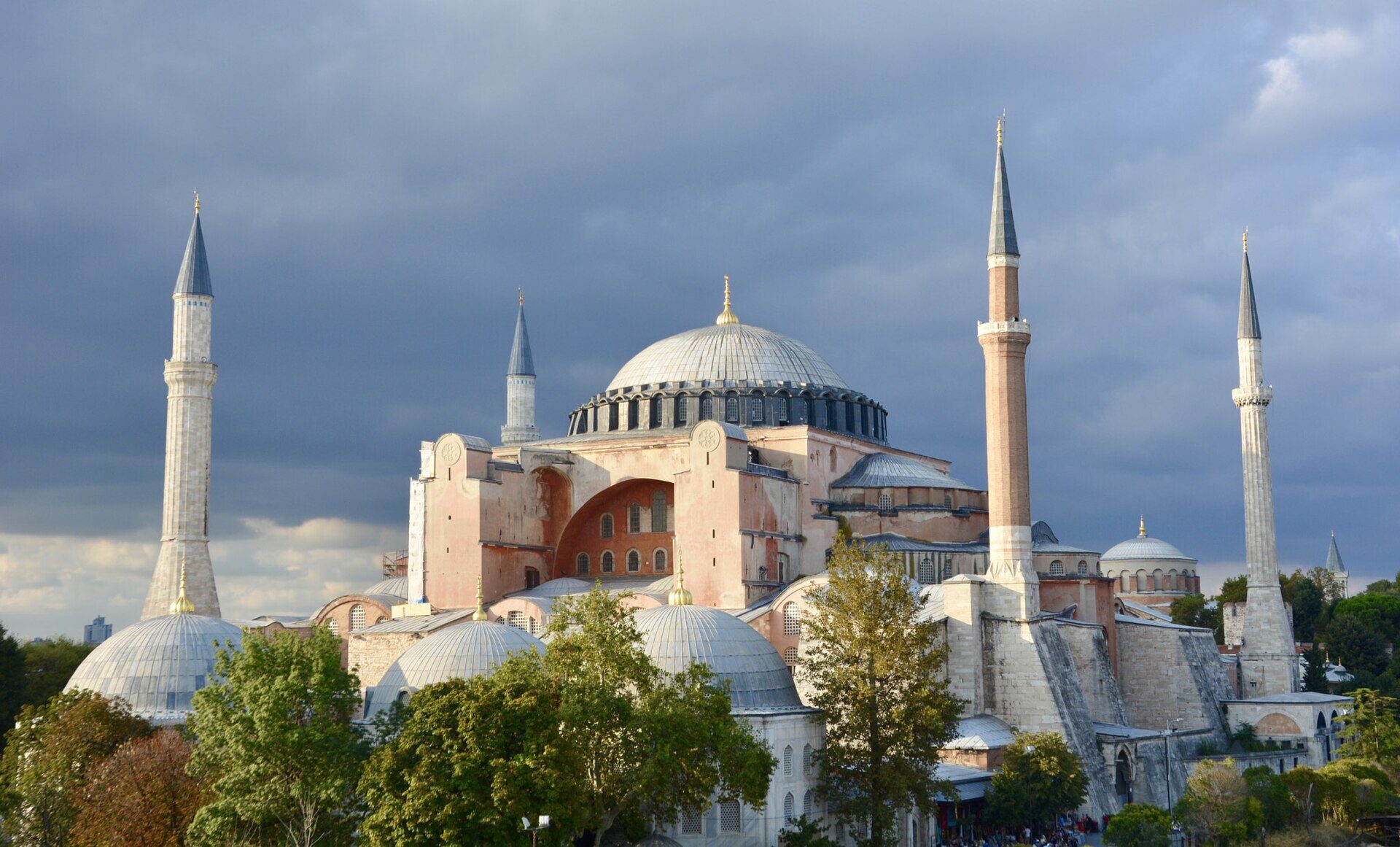
Heading to Hagia Sophia? Hagia Sophia is a 6th-century Byzantine cathedral in Istanbul, Turkey, now an active mosque. Built by Emperor Justinian in 537 AD, it was the world's largest building for nearly a thousand years. This guide covers what it costs, opening hours, the best months to go, how to get there and practical tips.
At a glance
- Entry
- Free for all visitors
- Opening hours
- 9 AM – 6 PM (closed during prayer times)
- Best time
- April to May and September to October
- Location
- Sultanahmet, Istanbul, Turkey
What to expect at Hagia Sophia
Hagia Sophia is the most important building in Istanbul and one of the most significant structures in the history of world architecture, a cathedral completed in 537 AD under the Byzantine Emperor Justinian I that stood for nearly a thousand years as the largest interior space ever enclosed by human engineering. Its central dome, 31 metres in diameter and rising 55 metres above the floor, appeared to ancient and medieval visitors to float miraculously on light rather than resting on walls, an effect created by the ring of 40 windows at the dome's base that flood the interior with Mediterranean light. When it was completed, Justinian reportedly said: 'Solomon, I have surpassed thee.'.
The building has served three distinct religious functions across its 1,500-year history. From 537 to 1453 it was the patriarchal cathedral of Constantinople and the spiritual heart of the Eastern Orthodox Church. The church where Byzantine emperors were crowned, where church councils debated the nature of Christ, and whose influence shaped Orthodox Christianity's architecture across Russia, Greece and the Balkans. After the Ottoman conquest of Constantinople in 1453, Sultan Mehmed II converted it to a mosque, adding the four minarets that now define Istanbul's skyline and covering the Christian mosaics with plaster. In 1934, Atatürk's government converted it to a secular museum. Also, in 2020 it was reconverted to an active mosque by the Turkish government.


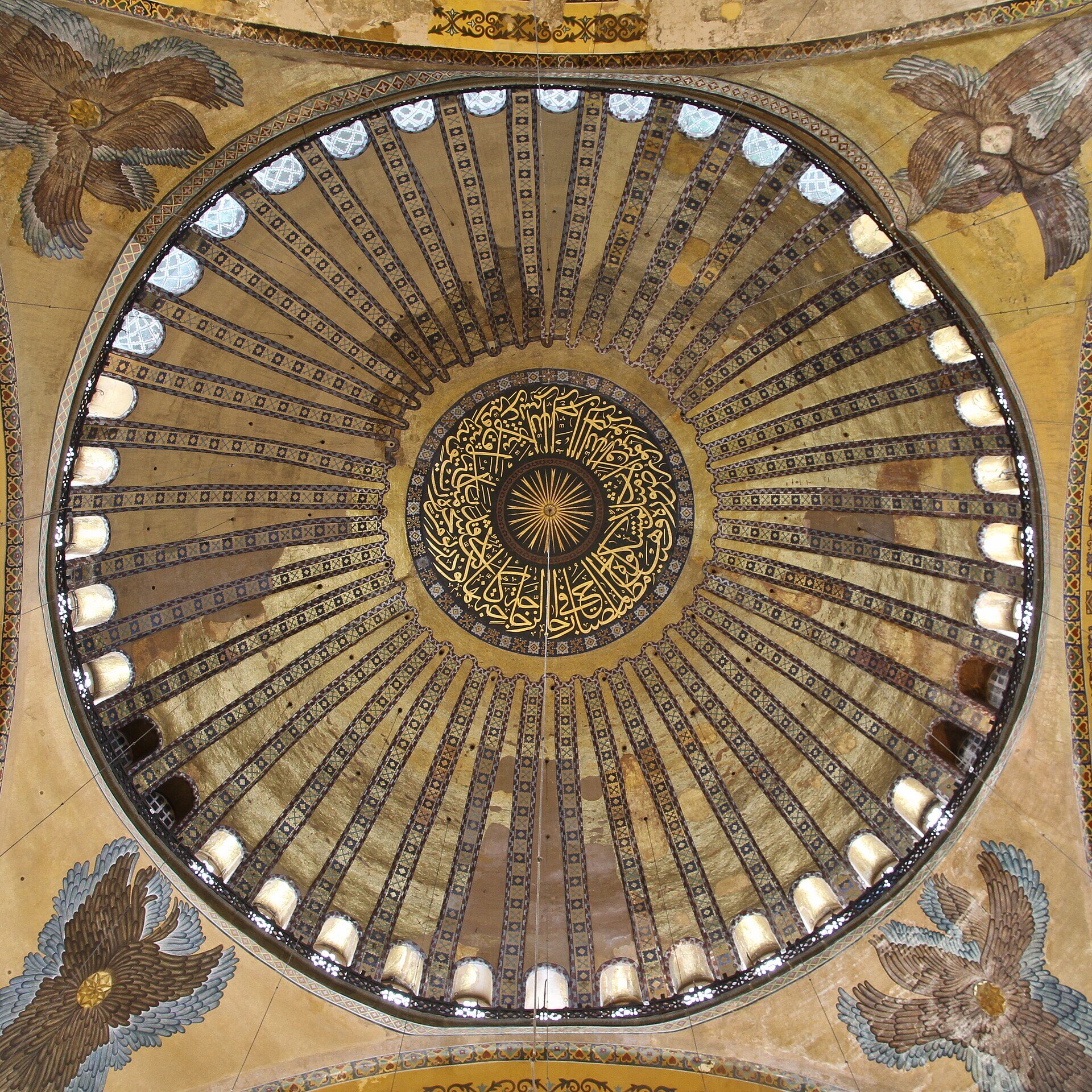
Byzantine mosaics
The Byzantine mosaics visible in the upper galleries are among the best surviving examples of Byzantine art, the Deësis mosaic (Christ flanked by the Virgin Mary and St John the Baptist, c.1261) counts as the single top Byzantine mosaic in existence, its gold background creating an unearthly luminosity and the psychological depth of the three faces representing a radical development in medieval religious art. The mosaics were hidden under Ottoman plasterwork for centuries and were rediscovered during the museum period. In fact, the upper galleries, reached by a ramp from the ground floor, give the best interior views of the dome and the full spatial drama of the building.
Entry to the site is free as an active mosque, but visitors must dress appropriately (women must cover hair and shoulders. All visitors must remove shoes at the entrance). The building is busiest between 10 AM and 3 PM, arriving at opening (9 AM) or after 4 PM gives far better access to the mosaics in the upper gallery and a more contemplative interior experience. In addition, the adjacent Sultanahmet Square (the ancient Hippodrome of Constantinople), Topkapi Palace (20 minutes' walk) and the Blue Mosque (directly across the square) form a triangle of first-rank Ottoman and Byzantine heritage all within walking distance. Besides, the combination of these sites in a single day gives the fullest available introduction to Istanbul's 1,500-year history as a world capital.
Sultanahmet neighbourhood
The Sultanahmet neighbourhood surrounding the site is one of the best urban heritage areas in Europe and the Middle East, the visible archaeology of the ancient Hippodrome (the Egyptian Obelisk of Thutmose III, the Serpent Column from Delphi, and the Column of Constantine still standing in the original race track alignment), the elaborate fountains and sebils of the Ottoman period, and the 19th-century residential character of the surrounding streets give the area a layered historical density unmatched in Istanbul's other neighbourhoods. Arriving in Sultanahmet early morning and walking its streets before the tour groups arrive from the cruise terminal is a good idea for the quality of the experience.
Hagia Sophia tickets and prices
Here is what a visit to the site costs. Prices are per person unless noted. Because they change with the season, treat them as a guide.
| Ticket or service | Price |
|---|---|
| Hagia Sophia Entry (Free for all · Modest dress required · Remove shoes) | Free |
| Topkapi Palace Entry (Adjacent · World-class Ottoman treasury) | TRY 500–700 |
| Istanbul Archaeology Museums (5 min walk · 3 museums in one ticket) | TRY 300–400 |
| Licensed guide (half day, Sultanahmet) (Covers the site, Blue Mosque, Topkapi) | TRY 1,500–3,000 |
How to get to Hagia Sophia
These are the easiest ways to reach the site, with typical costs and times.
T1 Tram from Taksim
M2 metro from Taksim to Vezneciler then T1 tram to Sultanahmet. The site visible from the tram stop.
Istanbul Airport → Sultanahmet
Havaist airport bus to Taksim then T1 tram to Sultanahmet stop, 5 min walk to the site.
Walk from Grand Bazaar
Pleasant walk downhill from the Covered Bazaar through the Hippodrome area directly to the site.
Best time to visit Hagia Sophia
The best time to visit the site is April to May and September to October. March, June to August and November also work well if your dates are fixed.
- Jan
- Feb
- Mar
- Apr
- May
- Jun
- Jul
- Aug
- Sep
- Oct
- Nov
- Dec
BestGoodFairAvoid
(Apr–May, Sep–Oct) · Good · OK (winter, cold but manageable)
Tips for visiting Hagia Sophia
These tips make a visit to the site easier, especially if it is your first time.
Arrive at 9 AM Opening Time
This site opens at 9 AM and the first 30 minutes are the most peaceful, crowds build rapidly by 10:30. Besides, early arrival means better light in the nave and unobstructed photography.
Dress Code Strictly Enforced
As an active mosque, the site requires removing shoes and covering shoulders and legs. Headscarves for women and trouser wraps are provided free at the entrance. Non-compliant visitors will be turned away.
Upper Gallery for the Finest Mosaics
The upper gallery (accessible via a ramp on the north side) contains the Deesis mosaic, one of the greatest surviving Byzantine artworks. Bring a zoom lens for detail shots from the gallery railing.
Check Prayer Times Before Visiting
The site closes to tourists for about 90 minutes at Friday noon prayer and 15–20 minutes at each of the five daily prayers. Check the current prayer schedule and plan around these closures.
Sultanahmet is Entirely Walkable
This site, the Blue Mosque, Topkapi Palace, the Grand Bazaar and the Archaeology Museums are all within 15 minutes' walk. Allow a full day for Sultanahmet, the densest concentration of major sights in any city in the world.
Use the Istanbul Museum Pass
The Istanbul Museum Pass (TRY 1,500 for 5 days) covers Topkapi Palace, Hagia Irene and 12 other state museums. If you plan more than 2 paid museums, it pays for itself. The site itself is always free.
Where to stay near Hagia Sophia
If you want to stay close to the site, start with these hotels. Rates are rough nightly guides, so check before you book.
Four Seasons Istanbul at Sultanahmet ★★★★★
$600–1,200/nightSultanahmet, 3 min walk to the site
The most perfectly located luxury hotel in Istanbul, converted Ottoman prison with rooms overlooking the site directly. Exceptional service.
Ibrahim Pasha Otel ★★★★
$150–300/nightSultanahmet, 5 min walk
Elegant boutique in a restored Ottoman townhouse. Rooftop terrace with the site and Blue Mosque views.
Sura Hotel Sultanahmet ★★★★
$100–200/nightSultanahmet, 8 min walk
Good value mid-range with clean rooms and reliable Turkish breakfast. Family-friendly.
Kelebek Special Cave Hotel (Cappadocia) ★★★★
TRY 3,000–6,000/nightGöreme centre
Original Göreme cave hotel, warmly run family property with authentic cave rooms and rooftop valley views.
Agora Guest House ★★★
$60–120/nightSultanahmet
Best-value guesthouse in Sultanahmet with helpful owners who know Istanbul deeply.
Fairy Chimney Inn (Cappadocia) ★★★
TRY 1,200–2,500/nightGöreme bazaar
Budget-friendly cave guesthouse in Göreme. Clean cave rooms and reliable WiFi. Popular with solo travellers.
Hagia Sophia: frequently asked questions
Can non-Muslims visit Hagia Sophia?
Yes, the site is open to all visitors outside the five daily prayer times. Generally, visitors must remove shoes, dress modestly (headscarves and leg coverings provided free at the entrance), and enter through the tourist entrance on the south side. Entry is free.
What is Hagia Sophia famous for?
This site was built in 537 AD and served as the largest cathedral in the world for nearly 1,000 years. Moreover, it became a mosque after the Ottoman conquest of 1453, a museum from 1934 to 2020. Also, was reconverted to an active mosque in 2020. Its massive central dome (31m diameter) appears to float on a ring of windows.
When is the best time to visit?
Arrive at opening time (9 AM) or late afternoon after 4 PM when crowds are thinner. Avoid Friday noon prayer (1 PM) when closed to tourists. April–May and September–October offer smaller crowds and pleasant weather.
How much does Hagia Sophia cost?
Entry is free for all visitors. The adjacent Topkapi Palace (TRY 500–700) and Istanbul Archaeology Museums (TRY 300–400) charge separately.
What are the opening hours of Hagia Sophia?
The site is open 9 AM – 6 PM (closed during prayer times). Hours can change on public holidays, so check before you travel.
How do you get to Hagia Sophia?
T1 tram, Sultanahmet stop. Taxis and ride-hailing apps are the easiest option if you are short on time.
Updated October 2026. Prices and opening hours change, so check the official website or the official Turkey tourism site before you travel. Spotted a mistake? Tell us and we will fix it.
Photos: Adli Wahid / CC BY-SA 3.0 via Wikimedia Commons; Arild Vågen / CC BY-SA 3.0 via Wikimedia Commons; Unknown author / Public domain via Wikimedia Commons; Eusebius / CC BY 3.0 via Wikimedia Commons.


