
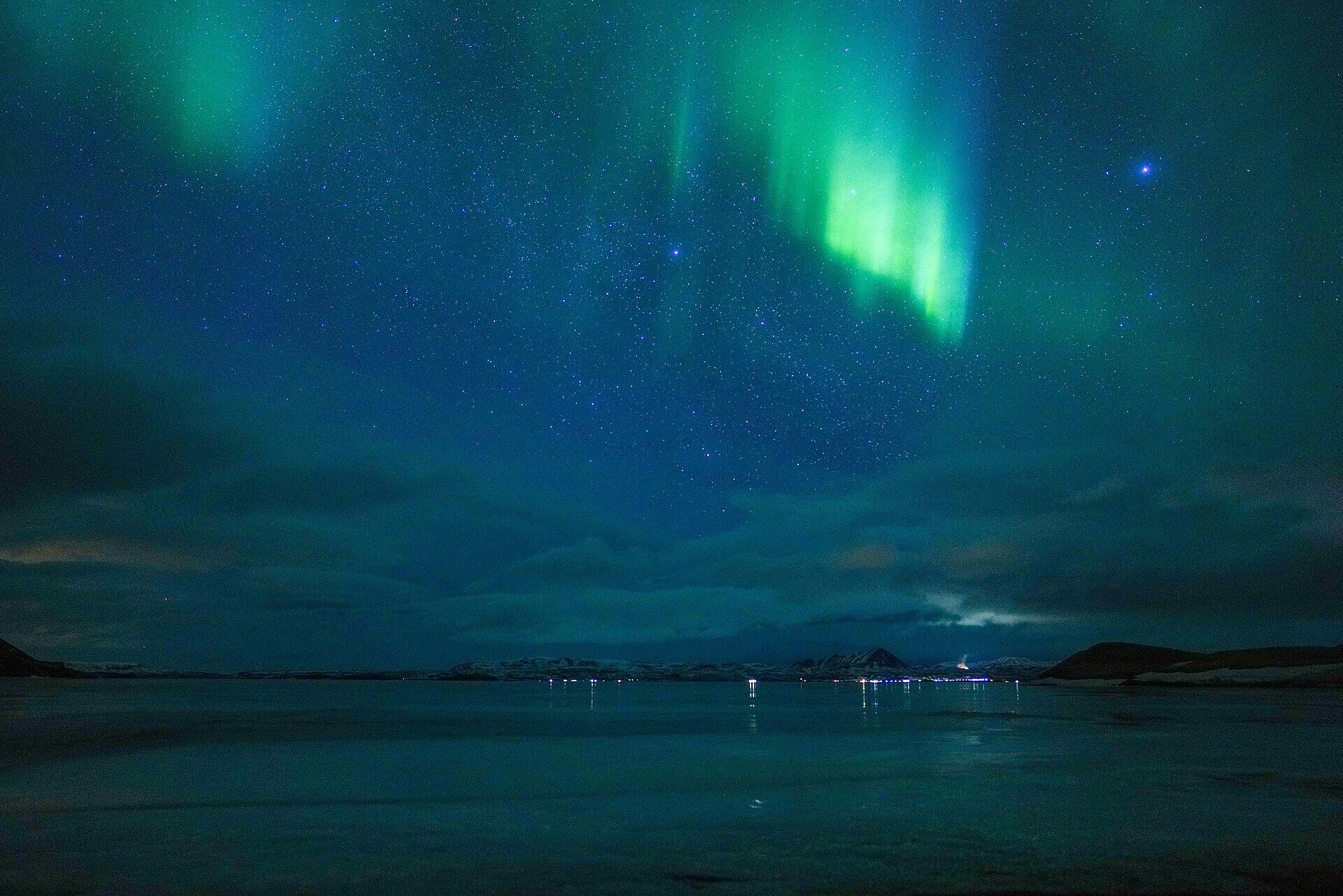
 Iceland
Heading to the Northern Lights in Iceland? Iceland sits directly under the auroral oval, making it one of the world's best Northern Lights destinations. The aurora borealis is visible from Iceland from late August to mid-April on clear nights with KP index 3 or above. This guide covers what it costs, opening hours, the best months to go, how to get there and practical tips.
At a glance
- Entry
- Free (self-drive) · ISK 7,000–25,000 (guided)
- Opening hours
- 10 PM – 2 AM highest activity
- Best time
- October to December
- Location
- Þingvellir · Reykjanes · Jökulsárlón · Any dark area
What to expect at the Northern Lights in Iceland
The Northern Lights (Aurora Borealis) are the most sought-after natural phenomenon in Iceland and the primary reason a significant proportion of visitors choose to visit in winter, a display of coloured light in the night sky caused by electrically charged particles from the sun interacting with oxygen and nitrogen atoms in the Earth's upper atmosphere at altitudes of 100–300km. The characteristic curtains, bands and waves of green (the most common colour, produced by oxygen at about 100km altitude), purple, pink and red (oxygen and nitrogen at varying altitudes) are visible from Iceland with particular frequency because the country sits within the auroral oval, the band of maximum auroral activity that encircles the magnetic poles.


Solar cycle
In addition, the solar cycle determines the frequency and intensity of Northern Lights displays. Aurora activity follows an 11-year solar cycle peaking at solar maximum (when the sun's electromagnetic activity is highest) and declining toward solar minimum. The solar maximum of Solar Cycle 25 peaked in about 2024–2025, meaning the 2025–2026 winter season should offer exceptional Northern Lights activity by historical standards. The frequency of major geomagnetic storms and vivid multi-coloured displays is highest at solar maximum and in the years immediately following it.
The fundamental requirements for seeing the Northern Lights are: darkness (the sky must be dark, Iceland's midnight sun season, May–July, means lights are not visible despite the aurora being active) clear skies (clouds prevent viewing entirely) And solar activity (a geomagnetic storm of KP 2 or higher is generally needed for visible activity in Iceland's southern latitude). In addition, the Northern Lights are visible in Iceland from about late August to mid-April, with the period November–February giving the longest periods of complete darkness. The aurora forecast at vedur.is (the Icelandic Met Office) provides cloud cover and aurora activity (KP index) forecasts updated every 3 hours, checking this in the evening before planning a viewing excursion is essential.
Best viewing locations
In general, the best viewing locations from Reykjavik are those with low light pollution to the north and east, the Grótta lighthouse at the western tip of the Seltjarnarnes peninsula (10 minutes' drive from central Reykjavik), the Öskjuhlíð hill behind the Perlan building, and the Elliðaárdalur valley park are all accessible from the city. Leaving the capital entirely gives dramatically better views, the Reykjanes Peninsula lava fields to the southwest, the Þingvellir area 45km northeast and the South Coast to the east are all within reasonable driving distance and offer much darker skies.
Northern Lights tours
Northern Lights tours from Reykjavik (about ISK 8,000–12,000 per person, 3–4 hours) offer the advantage of experienced guides who monitor the aurora forecast throughout the evening, adjust the destination based on real-time cloud cover data, and provide photography assistance. Most tours offer a guarantee of a repeat tour or refund if no aurora is seen (dependent on weather rather than solar activity, since weather is the primary limiting factor). Self-driving with a rental car and the vedur.is forecast app is equally effective for experienced travellers.
Photographing the Northern Lights requires: a camera with manual exposure control, a wide-angle lens (14–24mm), a tripod, and a remote shutter release or self-timer. A starting exposure of ISO 1600, f/2.8, 10–15 seconds captures most displays. Bright activity may need ISO 800 and 5–8 seconds for detail. Faint activity may need ISO 3200 and 20–25 seconds. Modern smartphone cameras (particularly the iPhone 15 Pro and Samsung S24 and later models with their dedicated Night Mode and Astrophotography modes) can capture aurora displays that would have required a dedicated camera five years ago, making Northern Lights photography accessible to most visitors.
Northern Lights tickets and prices
Here is what a visit to the Northern Lights in Iceland costs. Prices are per person unless noted. Because they change with the season, treat them as a guide.
| Ticket or service | Price |
|---|---|
| Northern Lights viewing (self-drive) (Free · Need dark skies + clear sky + KP3+) | Free |
| Northern Lights bus tour from Reykjavik (Chases clear skies · 3–4 hours · Refund if no lights) | ISK 7,000–12,000 |
| Northern Lights jeep tour (off-road) (Small group · Better sky-chasing ability) | ISK 15,000–25,000 |
| Aurora photography tour with guide (Professional photographer · 4–5 hours) | ISK 18,000–28,000 |
| Aurora + hot spring combination (Secret Lagoon or local hot tubs + aurora watching) | ISK 5,000–10,000 |
How to get to the Northern Lights in Iceland
These are the easiest ways to reach the Northern Lights in Iceland, with typical costs and times.
Self-drive from Reykjavik (best)
Drive 30 min on Route 1 east or Route 41 south. Pull over at any safe, dark location with clear horizons. Turn off headlights. Allow 10 min for eyes to adjust. Check vedur.is before departing.
Aurora minibus tour from Reykjavik
Operators chase the clearest sky areas. Most include a "no lights, no fee" guarantee. Best without a rental car.
Northern Lights boat tour
Boat tours from Old Harbour go into the dark fjord away from city lights. Aurora reflections in water on active nights are outstanding.
Best time to visit the Northern Lights in Iceland
The best time to visit the Northern Lights in Iceland is October to December. If you can, avoid April to August.
- Jan
- Feb
- Mar
- Apr
- May
- Jun
- Jul
- Aug
- Sep
- Oct
- Nov
- Dec
BestGoodFairAvoid
(Sep–Mar: dark nights) · OK (Aug: from mid-month) · Not visible (Apr–Jul: midnight sun)
Tips for visiting the Northern Lights in Iceland
These tips make a visit to the Northern Lights in Iceland easier, especially if it is your first time.
Use Vedur.is — It's Essential
The Icelandic Met Office aurora forecast shows KP index and cloud cover simultaneously. In fact, you need BOTH: high KP + clear sky. Check at 8 PM daily. If conditions align for your area, go immediately, both can change fast in Iceland.
Drive Away from Light Pollution
Even 20–30 minutes from Reykjavik makes a dramatic difference. Stop at a dark pull-off on Route 1 east or the Reykjanes Peninsula. Turn off headlights. Allow 10 minutes for your eyes to adjust.
Camera on Tripod — Always
Manual mode: ISO 1600, f/2.8, 8 seconds as a starting point. Adjust based on display brightness. Never handhold for aurora, even a subtle shake blurs the stars. Use the 2-second timer to eliminate button-press vibration.
Dress for -15°C Even in October
Aurora watching requires standing outside in the dark for potentially hours. Iceland at night is much colder than daytime. Full winter kit: base layer, fleece, down jacket, windproof outer, hat, gloves, warm socks.
Peak Activity: 10 PM–2 AM
Aurora activity typically peaks in late evening and early morning. Hours between 10 PM and 2 AM have highest probability of active displays. Be prepared for late nights throughout your stay.
Stay Multiple Nights
Iceland's weather means clear skies cannot be guaranteed. Plan at least 3 nights in aurora season to maximise chances. Experienced chasers plan 5–7 nights for near-certain sightings.
Where to stay near the Northern Lights in Iceland
If you want to stay close to the Northern Lights in Iceland, start with these hotels. Rates are rough nightly guides, so check before you book.
Hotel Ranga (Hella) ★★★★
ISK 55,000–100,000/nightHella, Dark skies, Aurora alert service
Iceland's most dedicated Northern Lights hotel. Staff wake guests when aurora appears. Outdoor hot tubs for aurora viewing. In fact, the best aurora-watching hotel in Iceland.
The Reykjavik EDITION ★★★★★
ISK 60,000–120,000/nightOld Harbour area, Reykjavik
Reykjavik's best hotel with harbour views. Excellent concierge organises aurora tours and monitors forecasts.
Fosshotel Glacier Lagoon ★★★★
ISK 35,000–65,000/nightSE Iceland, Jökulsárlón
Best location for aurora + icebergs combination. Generally, the lagoon reflects Northern Lights between icebergs on strong nights.
Canopy by Hilton Reykjavik ★★★★
ISK 25,000–50,000/nightReykjavik city centre
Well-designed contemporary hotel with excellent breakfast and central location for all sights and excursion operators.
Kex Hostel Reykjavik ★★★
ISK 6,000–18,000/nightOld Harbour area, Reykjavik
Converted biscuit factory, Reykjavik's best hostel. Excellent bar, live music, private and dorm rooms. Operates aurora alerts.
Northern Lights: frequently asked questions
How much does it cost to visit the Northern Lights in Iceland?
Prices for the Northern Lights in Iceland start from Free (self-drive) · ISK 7,000–25,000 (guided). Northern Lights viewing (self-drive): Free; Northern Lights bus tour from Reykjavik: ISK 7,000–12,000; Northern Lights jeep tour (off-road): ISK 15,000–25,000.
When is the best time to see the Northern Lights in Iceland?
Late August to mid-April when Iceland has sufficient darkness. September, February and March tend to coincide with increased geomagnetic activity. In addition, the equinoxes (around March 20 and September 22) statistically produce stronger aurora activity.
How do I predict the Northern Lights?
The Icelandic Met Office at vedur.is shows KP index forecast and cloud cover forecast simultaneously. Also, you need both: KP3+ AND clear sky. Check at 8 PM daily. If both conditions align, go immediately, Iceland's weather can change within an hour.
Do I need to leave Reykjavik?
On KP5+ nights, aurora can be visible from the city. But light pollution dramatically reduces the experience. Besides, a 30-minute drive gives much better views. Þingvellir, the Reykjanes Peninsula and anywhere on the Ring Road east of Vík work well.
What camera settings for aurora photography?
Manual mode: ISO 800–3200, aperture f/2.8–f/4, shutter 5–15 seconds. Wide-angle lens on tripod essential. Use 2-second timer. Start at ISO 1600, 8 seconds f/2.8 and adjust from there.
What are the opening hours of the Northern Lights in Iceland?
Northern Lights is open 10 PM – 2 AM highest activity. Hours can change on public holidays, so check before you travel.
Updated October 2026. Prices and opening hours change, so check the official website or the official Iceland tourism site before you travel. Spotted a mistake? Tell us and we will fix it.
Photos: Giles Laurent / CC BY-SA 4.0 via Wikimedia Commons; AstroAnthony / CC BY 4.0 via Wikimedia Commons; Giles Laurent / CC BY-SA 4.0 via Wikimedia Commons; Cameron Pickett / CC BY 3.0 via Wikimedia Commons.


