 Egypt
Heading to the Abu Simbel temples? Abu Simbel is a complex of two rock-cut temples commissioned by Ramesses II c.1264 BC, relocated in 1968 to save them from Lake Nasser, featuring four 20-metre colossi and an original solar alignment phenomenon. This guide covers what it costs, the best months to go, how to get there and practical tips.
At a glance
- Entry
- EGP 600–800 (USD 12–16)
- Best time
- November to March
- Location
- Abu Simbel, 290km south of Aswan
What to expect at Abu Simbel
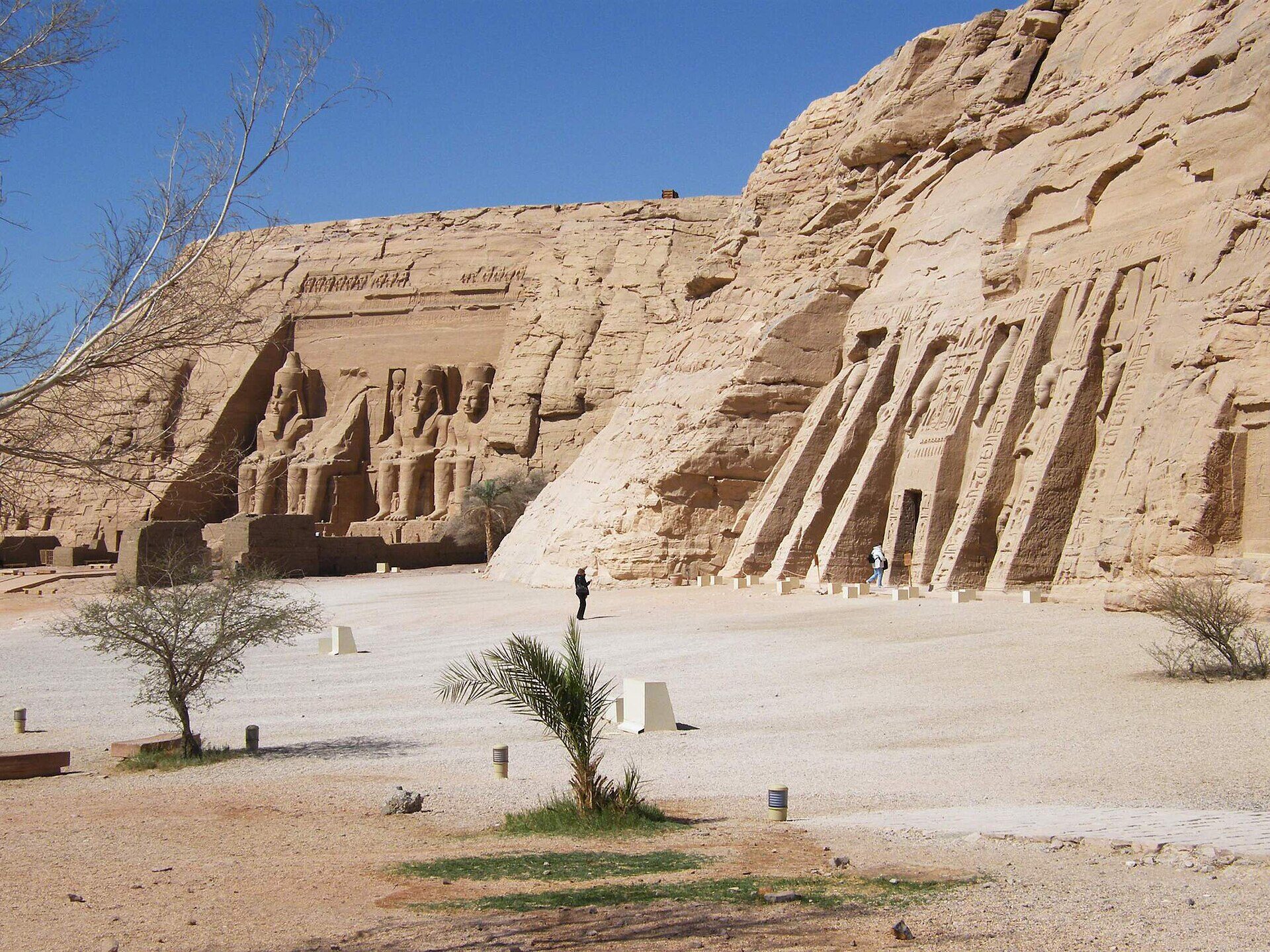
Abu Simbel is the most dramatically sited monument in Egypt and one of the most remarkable feats of engineering of the 20th century, two rock-cut temples commissioned by Ramesses II (about 1264 BC) at Abu Simbel on the west bank of the Nile in the extreme south of Egypt (now about 40km from the Sudanese border), saved from submersion under Lake Nasser by the remarkable international engineering project of 1964–1968 that cut both temples into about 1,000 blocks, moved the entire complex 64 metres vertically and 180 metres horizontally up the desert cliff, and reassembled it in an artificial mountain constructed for the purpose.
The relocation project, organised by UNESCO and involving 51 participating nations, was one of the most complex and expensive archaeological rescue operations in history and established the precedent for the global protection of cultural heritage that led directly to the World Heritage Convention of 1972.


Great Temple of Ramesses II
Besides, the Great Temple of Ramesses II is the larger of the two temples, its facade of four colossal seated statues of Ramesses (each 21 metres tall) carved from the living rock of the cliff face is one of the most powerful architectural statements of pharaonic Egypt. Moreover, the statues present Ramesses in the standard pose of divine kingship, crown of Upper Egypt, hands on knees, eyes fixed on the eastern horizon, their scale communicating the pharaoh's claim to divine status with unmistakeable force.
The interior of the temple descends 63 metres into the mountain through a sequence of progressively narrower hypostyle halls, the walls covered in reliefs depicting Ramesses's military victories (particularly the Battle of Kadesh against the Hittites, shown at enormous scale and in remarkable narrative detail) to the inner sanctuary, where four seated statues of the gods Ra-Harakhti, Amun, Ptah and the deified Ramesses himself are arranged in the darkness.
Solar alignment phenomenon
In general, the solar alignment phenomenon at Abu Simbel is the temple's most celebrated feature, twice a year (about February 22 and October 22, dates that may correspond to Ramesses's birthday and coronation) the rising sun shines directly through the temple entrance, down the 63-metre axis of the temple, and illuminates the faces of three of the four sanctuary statues (Ptah, the god of darkness, remains in shadow).
Generally, the phenomenon occurs at 6:22 AM on these dates and lasts about 20 minutes. The precision of the original temple's orientation was preserved to within one day when the temple was relocated (the relocation engineers considered this one of their greatest achievements). Besides, the solar alignment days attract large numbers of visitors and are celebrated by the Egyptian government as annual festivals at the site.
Small Temple of Hathor and Nefertari
Also, the Small Temple of Hathor and Nefertari, 100 metres north of the Great Temple, was built by Ramesses for his principal wife Nefertari, unique in ancient Egyptian history, where it was remarkably unusual for a pharaoh to depict his wife at the same scale as himself. Generally, the four facade statues of Ramesses are flanked by two statues of Nefertari at equal size, a statement of affection and political recognition that makes the Small Temple one of the most significant documents of women's status in ancient Egypt.
The interior reliefs of Nefertari making offerings to Hathor are among the top New Kingdom paintings surviving in Egypt, the colours of the queen's white dress, green mantle and elaborate headdress still vivid after 3,270 years.
Abu Simbel is 280km south of Aswan and most efficiently reached by morning flight from Aswan (about USD 80–100 return, 45 minutes. Flights typically depart Aswan at 8 AM and return at noon), the flight noticeably reduces the physical demands of the visit compared to the alternative 3-hour road journey through the Nubian desert each way. The road convoy from Aswan (tourist buses travel in an organized convoy departing Aswan at 4 AM, arriving at 7 AM) is the budget alternative at about EGP 250–400 per person including transport and guide. Entry to both temples is about EGP 360. The temples are open daily from 5 AM to 6 PM.
Making the most of it
An overnight stay at Abu Simbel (the Seti Abu Simbel Lake Hotel or the Nefertari Hotel both have lake views) allows visiting the temples at the top times, at sunrise (the earliest morning light on the facade before the tour groups arrive) and at the Sound and Light Show in the evening (about EGP 350, three performances nightly in Arabic, English and French). The lake, Lake Nasser, the world's largest artificial reservoir created by the Aswan High Dam, provides the backdrop for both the temples and the hotel, and a sunset cruise on the lake in a local felucca is available through the hotels.
Abu Simbel tickets and prices
Here is what a visit to the Abu Simbel temples costs. Prices are per person unless noted. Because they change with the season, treat them as a guide.
| Ticket or service | Price |
|---|---|
| Abu Simbel Temples entry (both temples) (Open 5 AM–6 PM daily) | EGP 600–800 (USD 12–16) |
| Return flight Aswan → Abu Simbel → Aswan (EgyptAir · 40 min each way · Most efficient) | EGP 800–1,500 |
| Police convoy bus from Aswan (return) (3.5 hrs each way · Departs 3:30 AM · Cheapest) | EGP 200–400 |
| Ticket or service | Price |
|---|---|
| Egyptian nationals (Significant discount) | EGP 60–80 |
| Ticket or service | Price |
|---|---|
| Sound and Light Show (evening) (3x weekly · Abu Simbel village) | EGP 200–300 |
| Overnight stay for sunset + sunrise (Seti Abu Simbel Lake Resort · Best experience) | USD 80–160/night |
| Egyptologist guide at Abu Simbel (Explains iconography, solar alignment, relocation) | USD 40–60 |
ℹ Prices in Egyptian Pound (EGP) . Confirm rates before visiting.
How to get to Abu Simbel
These are the easiest ways to reach the Abu Simbel temples, with typical costs and times.
EgyptAir flight Aswan → Abu Simbel
Daily EgyptAir flights from Aswan Airport. Most efficient option. Combine flight one way + convoy the other to save cost.
Police convoy bus from Aswan
Convoy departs Aswan 3:30 AM, arrives Abu Simbel 7 AM (before tour groups), returns mid-morning.
Private car from Aswan
Greater flexibility. Must join official convoy regardless.
Best time to visit Abu Simbel
The best time to visit the Abu Simbel temples is November to March. April to May and September to October also work well if your dates are fixed.
- Jan
- Feb
- Mar
- Apr
- May
- Jun
- Jul
- Aug
- Sep
- Oct
- Nov
- Dec
BestGoodFairAvoid
(Oct–Apr: 18–30°C) · Good (May, Sep) · OK (Jun–Aug: 42–47°C desert)
Tips for visiting Abu Simbel
These tips make a visit to the Abu Simbel temples easier, especially if it is your first time.
Arrive Before 8 AM for Near-Solitude
The convoy bus arrives at 7 AM, giving 60–90 minutes before the main tour groups. Abu Simbel in early morning desert light, in near-silence, is remarkable.
Feb 22 and Oct 22 for Solar Alignment
The alignment event draws crowds, arrive the day before and stay overnight to experience it at dawn without day-tripper pressure.
The Interior Pigment Is Extraordinary
Original 3,300-year-old colour, vivid reds, blues, yellows, preserved by the constant desert environment. Unlike anything elsewhere in Egypt.
Don't Skip the Smaller Hathor Temple
The Nefertari/Hathor temple (100m away, also guarded by colossi) is often rushed. Allow 45 minutes. The interior is fully decorated and the female colossi are remarkable.
Fly One Way, Bus the Other
Take the early convoy bus (arrives 7 AM) and fly back on the midday EgyptAir flight. Saves 3.5-hour return bus while keeping the morning arrival advantage.
Stay Overnight for Sunset and Sunrise
The Seti Abu Simbel Lake Resort gives sunset at the temples (day-trippers gone) and sunrise the next morning, the top Abu Simbel experience possible.
Where to stay near Abu Simbel
If you want to stay close to the Abu Simbel temples, start with these hotels. Rates are rough nightly guides, so check before you book.
Sofitel Legend Old Cataract (Aswan) ★★★★★
USD 250–600/nightAswan, 290km from Abu Simbel
Aswan's great historic hotel, Agatha Christie wrote here. Day trips to Abu Simbel arranged. In addition, the top Aswan experience.
Seti Abu Simbel Lake Resort ★★★★
USD 80–160/nightAbu Simbel village, Adjacent to temples
Only good hotel at Abu Simbel, allows early access and sunset views of the temples. Essential for the solar alignment event.
Movenpick Resort Aswan ★★★★★
USD 120–250/nightElephantine Island, Aswan
On Elephantine Island, hotel boat access only. Remarkable Nile setting, the most peaceful large hotel in Aswan.
Nefertari Hotel Abu Simbel ★★★
USD 40–80/nightAbu Simbel village
Only budget option in Abu Simbel village. Simple rooms but the only affordable overnight near the temples.
Abu Simbel: frequently asked questions
How do I get to Abu Simbel?
Flight from Aswan (40 min, EGP 800–1,500 return) or police convoy bus (3.5 hours, EGP 200–400). Moreover, most visitors do an early morning bus, 2 hours at the temples, and return. Staying overnight gives sunset and sunrise at the temples.
What is the solar alignment?
On February 22 and October 22 each year, the rising sun illuminates the inner sanctuary statues, four seated figures including Ramesses II, except the figure of Ptah (god of darkness). Generally, this solar engineering was preserved through the 1968 relocation.
How much does Abu Simbel cost?
Entry EGP 600–800 (about USD 12–16). Open from 5 AM, early morning before 8 AM has far fewer visitors.
Was the relocation successful?
The temples were cut into 1,036 pieces and reassembled 65m higher and 200m inland between 1968–71. In fact, the solar alignment engineering was preserved exactly. Inside the temples the experience is completely authentic.
When is the best time to visit the Abu Simbel temples?
The best time to visit the Abu Simbel temples is November to March. April to May and September to October also work well if your dates are fixed.
Updated October 2026. Prices and opening hours change, so check the official website or the official Egypt tourism site before you travel. Spotted a mistake? Tell us and we will fix it.
Photos: youssef_alam / CC BY 3.0 via Wikimedia Commons; Warren LeMay from Cullowhee, NC, United States / CC0 via Wikimedia Commons; youssef_alam / CC BY 3.0 via Wikimedia Commons; jokertrekker / CC BY 3.0 via Wikimedia Commons.