 Greece
Planning a visit to the Meteora monasteries? Meteora is a UNESCO World Heritage Site of six Eastern Orthodox monasteries perched on natural sandstone pillars in Thessaly, Greece, dating from the 14th century. This guide covers what it costs, the best months to go, how to get there and practical tips.
At a glance
- Entry
- €3 each (Entry to each monastery)
- Best time
- April to May and September to October
- Location
- Kalambaka, Thessaly, central Greece
What to expect at Meteora
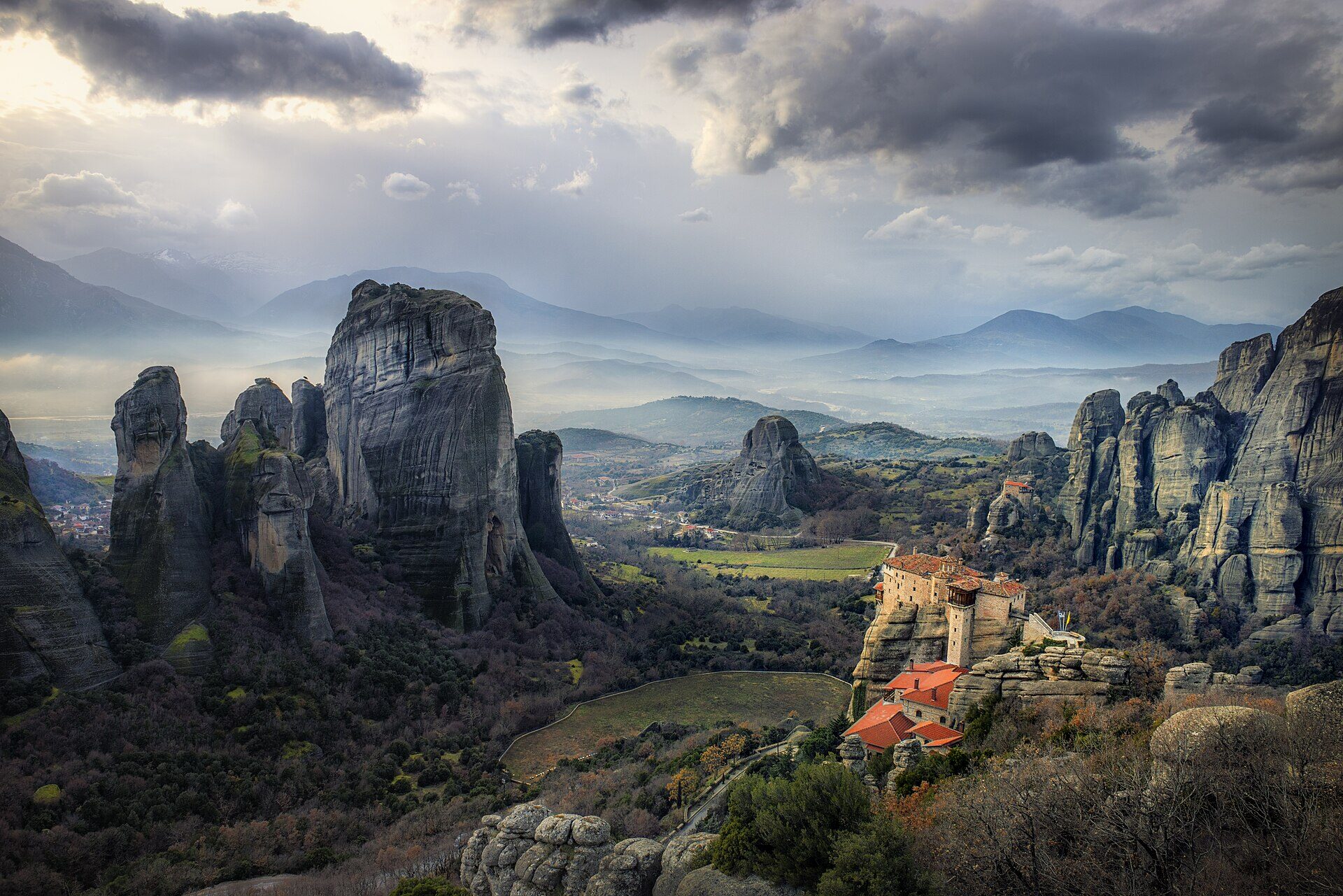
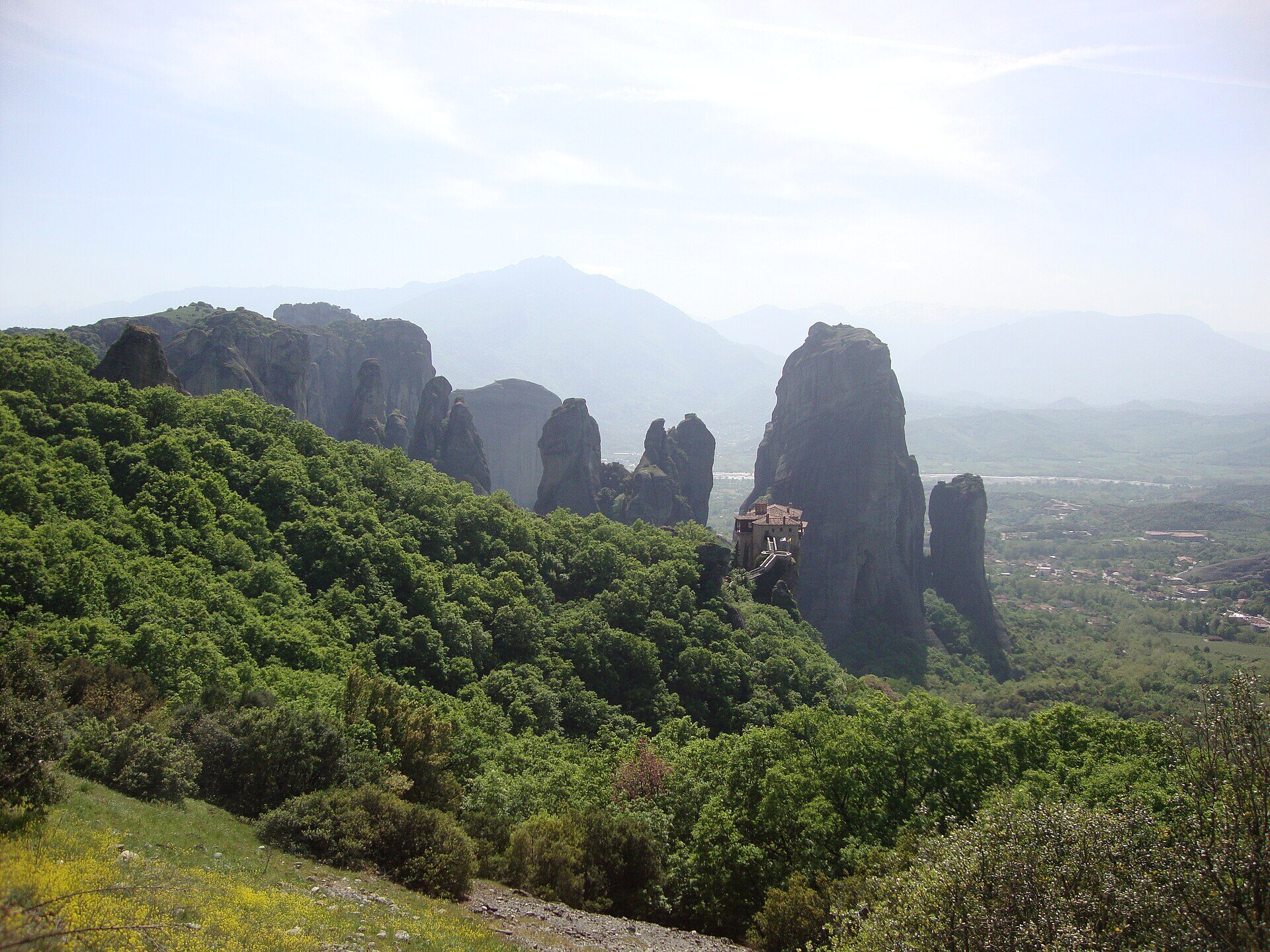
Meteora is one of the most striking religious landscapes in the world, a geological formation in the plain of Thessaly in central Greece where natural columns of conglomerate rock, formed from ancient river sediment deposits about 60 million years ago and subsequently sculpted by millions of years of water erosion into their present improbable forms, rise 300–400 metres vertically from the plain below. Beginning in the 14th century, Eastern Orthodox monks chose the most inaccessible of these rock pillars as the sites for monasteries, seeking, in the tradition of the Desert Fathers, complete physical isolation from the secular world and its distractions.
The combination of the remarkable geology and the outstanding human determination to build sacred spaces upon it creates a landscape that has no equivalent anywhere in Europe.
Six monasteries remain active today out of the twenty-four that once existed across the rock complex. Great Meteoron (Megalou Meteorou), the largest and oldest, was founded in the mid-14th century by Saint Athanasios the Meteorite and sits on the highest pillar at 613 metres altitude. Its treasury and museum contain illuminated manuscripts, Byzantine icons, ecclesiastical vestments and artefacts spanning six centuries of continuous monastic life, one of the finest collections of Byzantine heritage accessible to visitors anywhere in Greece. The church of the Transfiguration at its centre has 16th-century frescoes covering every interior surface with a quality that rivals anything in the monasteries of Mount Athos.
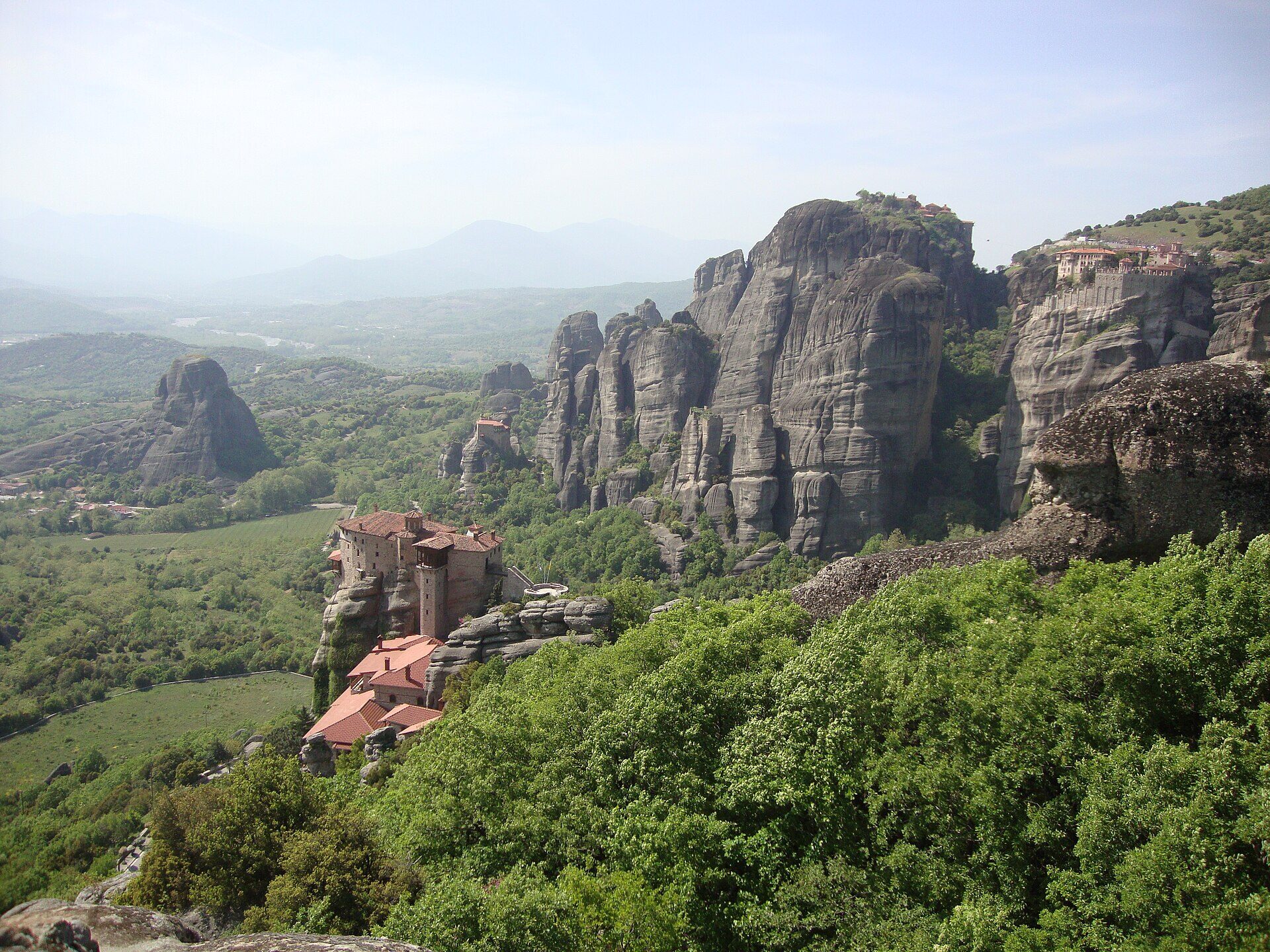

Varlaam Monastery
Varlaam Monastery (built 1541–44) contains frescoes from the same period depicting Christ Pantocrator in the dome, the Last Judgment covering the narthex wall, and saints and martyrdom scenes throughout the main church. The original means of access before stone stairways were carved in the 1920s was a net and windlass mechanism, visiting monks and all supplies were hauled up by rope, with the ropes traditionally replaced only when they broke.
This fact alone communicates the depth of commitment with which the Meteoran monks sought their isolation. Rousanou Monastery is the most dramatically placed of all, perched on a narrow pillar with near-vertical drops on every side, and is home to an exclusively female monastic community whose history dates to the 16th century.
Hiking circuit
The hiking circuit connecting all six monasteries through the rock formations (about 12km, 3–4 hours) is the finest way to experience Meteora and the approach strongly recommended over visiting by road alone. The path reveals perspectives impossible from the road: the scale of the pillars from within the formation rather than from the plain below, Byzantine hermit caves carved into the cliff faces at heights suggesting extreme commitment to solitude, viewpoints where multiple monasteries are simultaneously visible against the rock backdrop, and the geology of the conglomerate at close range. Also, the circuit is well-marked, requires no technical ability or specialist equipment, and passes the monasteries in sequence compatible with their varying opening and closing days.
The most striking visual experience at Meteora is available only to those who stay overnight in Kalambaka, the small city at the base of the rocks: dawn mist filling the valley between the pillars, the monastery silhouettes emerging from above the cloud layer, the sky above clear and blue while the plain below remains invisible. This phenomenon occurs most reliably in the cooler months, October through March, when temperature differentials between the warm plain and the cool rock faces create morning fog. It does not occur every morning, but an overnight stay of two nights in the right season gives a reasonable probability of witnessing one of the most remarkable landscape views available in Greece.
What visitors notice
Meteora is accessible by direct train from Athens in 4.5 hours (about €20–35 one way from Larissis station), a journey through the agricultural landscapes of Thessaly before the rock formations appear suddenly on the northern horizon. Kalambaka has accommodation from budget guesthouses (€40–70/night) to boutique hotels with rock-face terrace views. Day-tripping from Athens leaves insufficient time for both the dawn mist experience and the full monastery circuit, an overnight stay of two nights at minimum is the recommended approach for visitors who want to understand what makes Meteora striking.
Meteora tickets and prices
Here is what a visit to the Meteora monasteries costs. Prices are per person unless noted. Because they change with the season, treat them as a guide.
| Ticket or service | Price |
|---|---|
| Entry to each monastery (6 active · €3 each · Check closing days) | €3 each |
| Train Athens → Kalambaka (4.5 hours · trainose.gr) | €20–35 one way |
| Ticket or service | Price |
|---|---|
| Greek nationals (Free entry) | Free |
| Ticket or service | Price |
|---|---|
| Hiking circuit between monasteries (3–4 hours · All 6 connected · Free trail) | Free (trail) |
| Taxi tour from Kalambaka (Half day · All 6 monasteries) | €50–80 |
| Dawn viewpoint at Agia Triada (Best photograph in Meteora · Road accessible) | Free |
ℹ Prices in Euro (€) . Confirm rates before visiting.
How to get to Meteora
These are the easiest ways to reach the Meteora monasteries, with typical costs and times.
Train Athens (Larissis) → Kalambaka
Trains via Palaiofarsalos. Book at trainose.gr.
Bus from Athens (KTEL)
KTEL buses from Athens Liossion terminal.
Taxi from Kalambaka
Most practical for those not hiking the full circuit.
Best time to visit Meteora
The best time to visit the Meteora monasteries is April to May and September to October. March, June and November also work well if your dates are fixed.
- Jan
- Feb
- Mar
- Apr
- May
- Jun
- Jul
- Aug
- Sep
- Oct
- Nov
- Dec
BestGoodFairAvoid
(Apr–May, Sep–Oct: cool, dramatic mist) · Good · OK (summer: hot but monasteries cooler)
Tips for visiting Meteora
These tips make a visit to the Meteora monasteries easier, especially if it is your first time.
Stay Overnight for Dawn Mist
The dawn mist filling the valley requires an overnight in Kalambaka. In addition, the Agia Triada viewpoint at 6 AM is the finest photograph available at Meteora.
Hike the Full Circuit
In general, the 3–4 hour hiking trail connecting all six monasteries is the finest way to see Meteora, viewpoints, hermit caves and perspectives impossible from the road.
Dress Conservatively — Strictly Enforced
Long trousers for men, below-knee skirts and covered shoulders for women. Free wraps at entrances.
Great Meteoron for Best Interior Frescoes
Founded 1344, the largest monastery has the finest Byzantine frescoes and the most complete treasury museum.
Check Closing Days in Advance
Each monastery closes a different day. Check current schedules at meteora-greece.com before planning your circuit.
Overnight in Kalambaka
Day trip from Athens (4.5 hrs each way) is exhausting. Generally, one night allows sunset and dawn mist, dramatically better experience.
Where to stay near Meteora
If you want to stay close to the Meteora monasteries, start with these hotels. Rates are rough nightly guides, so check before you book.
Hotel Grande Bretagne, Athens ★★★★★
€300–700/nightSyntagma Square, Acropolis views
Athens's most historic hotel, 1874 neoclassical landmark with Acropolis views from the rooftop restaurant.
Canaves Oia Epitome, Santorini ★★★★★
€600–1,500/nightOia, Caldera views from every room
Santorini's most acclaimed boutique, cave suites with private infinity pools and the finest caldera views.
Hotel Electra Athens ★★★★
€90–200/nightNear Acropolis Museum, Central
Excellent mid-range in central Athens. Rooftop pool with Acropolis view and good breakfast.
Athenstyle Hostel ★★★
€25–60/nightMonastiraki, Old Athens centre
Best hostel in Athens, rooftop terrace with Acropolis views and perfect location for the ancient sites.
Creta Maris Beach Resort, Crete ★★★★
€100–250/nightHersonissos, Crete
Excellent Cretan beach resort. Good base for Knossos, Heraklion and eastern Crete exploration.
Meteora: frequently asked questions
How much does it cost to visit the Meteora monasteries?
Prices for the Meteora monasteries start from €3 each (Entry to each monastery). In addition, entry to each monastery: €3 each; Train Athens → Kalambaka: €20–35 one way. Also, booking online is usually cheaper than paying at the gate.
How many monasteries?
Six remain active: Great Meteoron, Varlaam, Rousanou, St Nicholas, St Stephen and Agia Triada. In fact, each charges €3. Check closing days, each closes a different day.
How to get there?
Train from Athens Larissis to Kalambaka, 4.5 hours (€20–35). Book at trainose.gr.
Can I hike between monasteries?
Yes, a 3–4 hour circuit trail connects all six through the rock formations. Finest way to see Meteora.
What to wear?
Conservative dress required, men: long trousers. Women: below-knee skirt, covered shoulders. Free wraps at entrances.
When is the best time to visit the Meteora monasteries?
The best time to visit the Meteora monasteries is April to May and September to October. March, June and November also work well if your dates are fixed.
Updated October 2026. Prices and opening hours change, so check the official website or the official Greece tourism site before you travel. Spotted a mistake? Tell us and we will fix it.
Photos: Stathis floros / CC BY-SA 4.0 via Wikimedia Commons; XeresNelro / CC BY-SA 4.0 via Wikimedia Commons; XeresNelro / CC BY-SA 4.0 via Wikimedia Commons; XeresNelro / CC BY-SA 4.0 via Wikimedia Commons.