 Greece
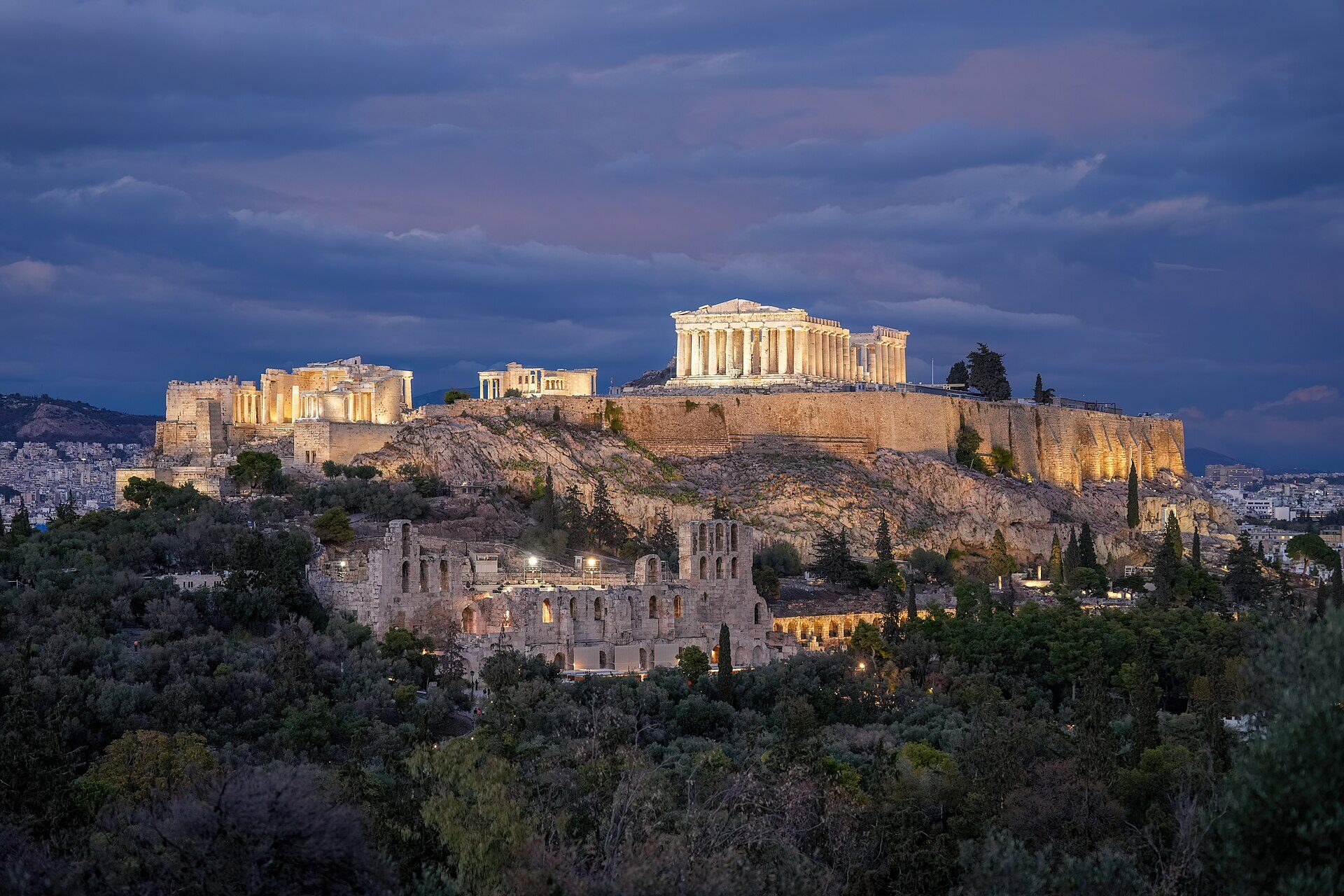
Heading to the Acropolis of Athens? The Acropolis of Athens is a rocky citadel above Athens containing the Parthenon (447–432 BC), Erechtheion, Propylaia and Temple of Athena Nike, the finest surviving monuments of ancient Greek civilisation. This guide covers what it costs, opening hours, the best months to go, how to get there and practical tips.
At a glance
- Entry
- €20 peak · €10 winter · Combined €30 (7 sites)
- Opening hours
- 8 AM – sunset (varies by season)
- Best time
- April to May and September to October
- Location
- Acropolis Hill, central Athens
What to expect at the Acropolis of Athens
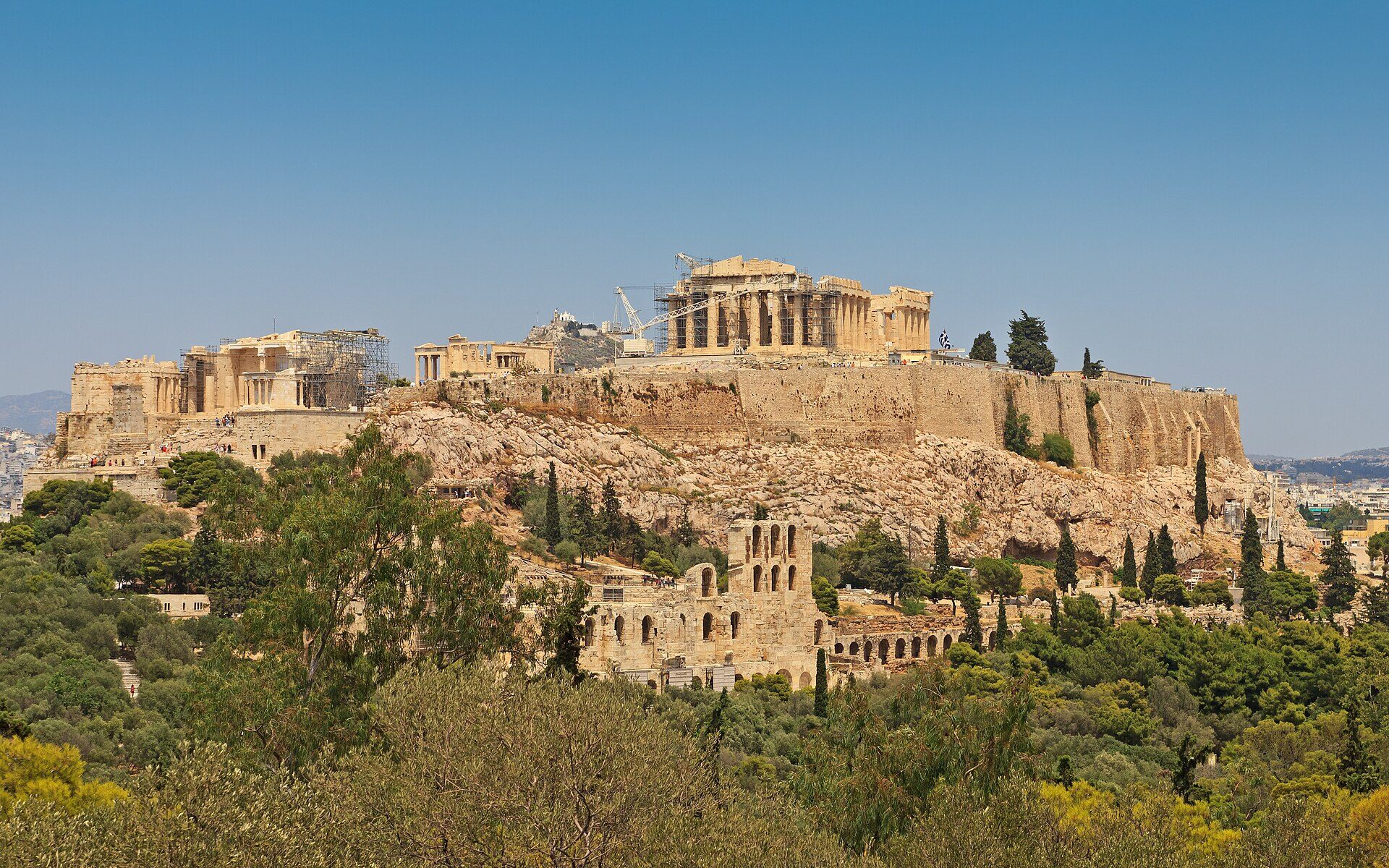
The Acropolis of Athens is the most visited archaeological site in the world, a limestone plateau rising 156 metres above the city where the Athenians of the 5th century BC constructed monuments of such mathematical precision that they remain unequalled two and a half millennia later. In fact, the rocky citadel was inhabited from the Neolithic period (around 4000 BC), served as a Bronze Age Mycenaean palace, and under Pericles in Athens's Golden Age became the greatest building programme the ancient world had yet seen.
In addition, the philosopher Socrates walked these precincts. Moreover, the historian Thucydides watched them from below. Every major thinker and politician of the ancient Greek world knew this skyline as the symbol of Athenian ambition and achievement.
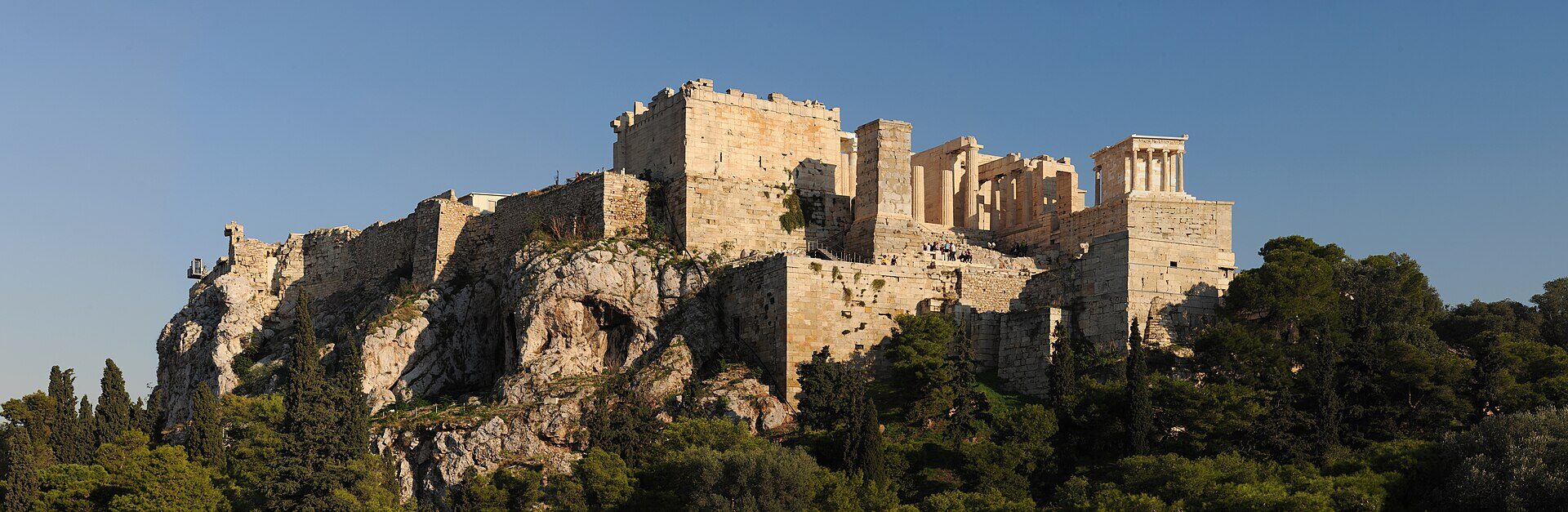
Parthenon
The Parthenon (447–432 BC), dedicated to Athena Parthenos, is the centrepiece and the most technically accomplished building of antiquity. What appears to be a straightforwardly geometrical Doric temple is a masterwork of deliberate optical correction: the stylobate bows upward 6cm at the centre, all 46 outer columns lean slightly inward and taper subtly in diameter (a technique called entasis), and no two elements are exactly parallel. Every apparent straight line is a carefully calculated curve designed to counteract the optical illusions that would otherwise make a perfectly regular building appear distorted to the human eye. The effect is a building that seems more perfect than physical perfection, a mathematical argument in marble for the rationality of the cosmos.
Erechtheion
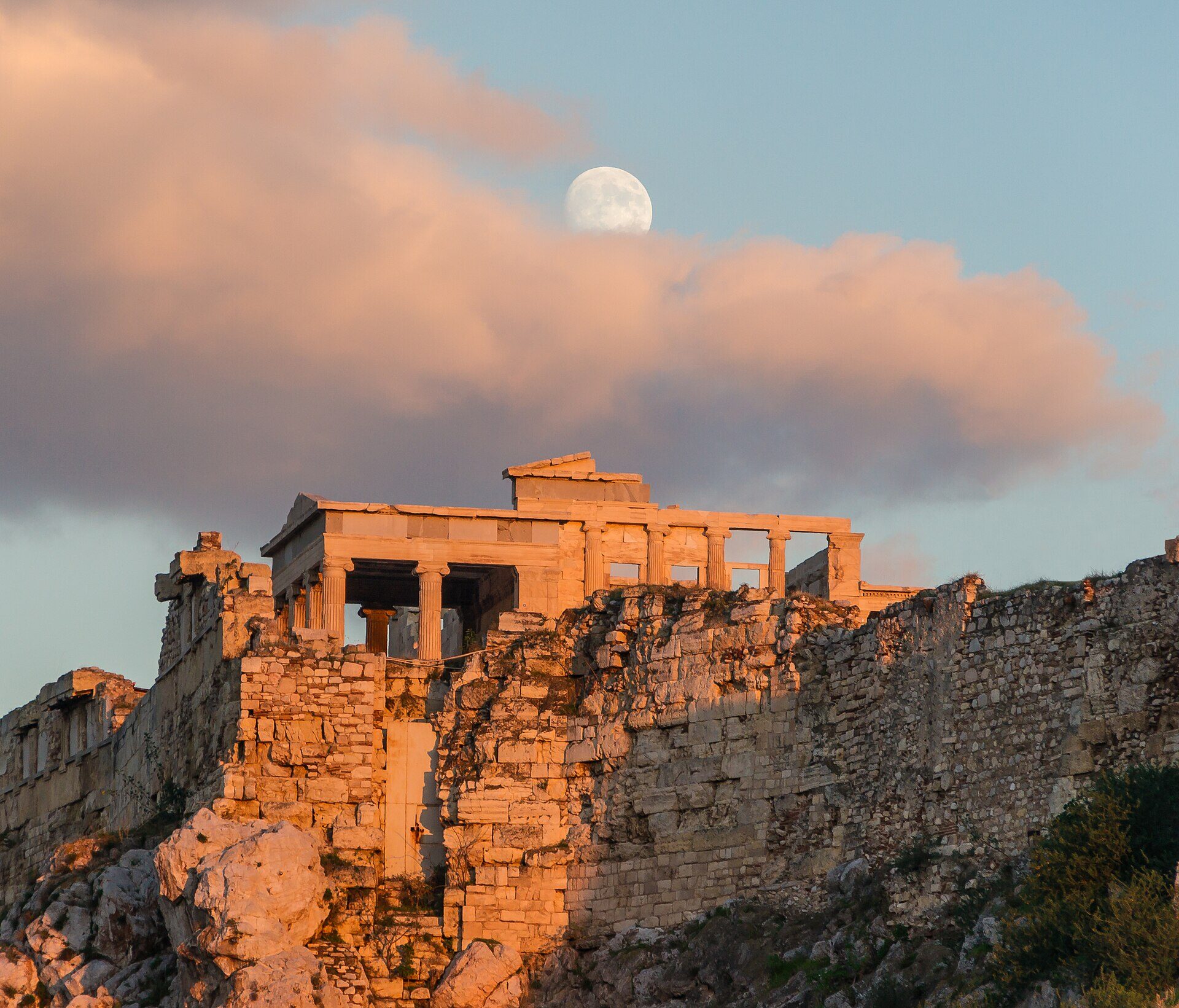
Also, the Erechtheion (421–406 BC) on the north side is architecturally the most complex building on the citadel and historically the most sacred, it housed the ancient olive wood statue of Athena Polias, the city's most revered cult object, and marks the spot where Athena and Poseidon competed for patronage of the city. Generally, the famous Porch of the Caryatids, six carved female figures serving as columns supporting the south porch roof, is among the most reproduced architectural images in Western art. Five of the original caryatids are now in the Acropolis Museum (one is in the British Museum in London) The figures on site are high-quality replicas.
Propylaia
The Propylaia (437–432 BC) is the monumental gateway, a roofed entrance colonnade of Pentelic marble designed to be as impressive as the temples beyond it, establishing the Acropolis as a theatre of arrival as much as a sanctuary. Also, the Temple of Athena Nike (427–424 BC) at the southwest bastion is the smallest building on the citadel, a miniature Ionic gem whose frieze depicted the battles of Marathon and Plataea and whose dedication to Athena as goddess of victory was the city's prayer for continued military success.
Acropolis Museum
In general, the Acropolis Museum, 200 metres from the citadel entrance and opened in 2009, is essential context for the site and should not be skipped. Moreover, the top floor contains the surviving Parthenon frieze panels in their original sequence, 160 metres of frieze depicting 378 human and divine figures in the Panathenaic procession, displayed at eye level for the first time in their history. Generally, the contrast between the original weathered marble and the plaster casts marking the positions of panels currently held in the British Museum makes the ongoing dispute about the Parthenon sculptures physically visible and immediate.
In fact, the ground floor is built over an ongoing excavation of the ancient Athenian neighbourhood, visible through glass floors, a museum built directly above the city it describes.
The single most important practical decision for an Acropolis visit is arriving at the 8 AM opening before the cruise ship and tour group arrivals that transform the site by 10 AM. In addition, the Parthenon in the low morning light from the east, with Athens spread below in the first haze and perhaps fifty other visitors present, is a completely different encounter from the same monument at midday surrounded by thousands.
Besides, the site is at its finest in October and April, mild temperatures, good light and the smallest crowds of any month with full opening hours. Closed shoes with grip are a good idea. The ancient marble is polished smooth by millions of visitors and becomes dangerously slippery in wet conditions.
Acropolis tickets and prices
Here is what a visit to the Acropolis of Athens costs. Prices are per person unless noted. Because they change with the season, treat them as a guide.
| Ticket or service | Price |
|---|---|
| Acropolis entry (peak Apr–Oct) (Single site ticket) | €20 |
| Combined ticket (7 sites, 5 days) (Acropolis + Agora + Temple Zeus + 4 more) | €30 |
| Acropolis Museum (Separate entry · World-class sculpture collection) | €10 |
| Ticket or service | Price |
|---|---|
| Greek nationals (Free entry · EU residents: reduced in winter) | Free / Reduced |
| Ticket or service | Price |
|---|---|
| Licensed guide (Acropolis, 2 hours) (Ministry of Culture licensed · Greek and English) | €30–60/person |
| Dinner in Plaka neighbourhood (Below the Acropolis · Taverna cuisine) | €20–45/head |
ℹ Prices in Euro (€) . Confirm rates before visiting.
How to get to the Acropolis of Athens
These are the easiest ways to reach the Acropolis of Athens, with typical costs and times.
Athens Metro Line 2 → Acropolis station
The Acropolis metro station is directly below the south slope. Exit and walk uphill to the main entrance. Fastest and cheapest from central Athens.
Walk from Monastiraki or Syntagma
Walking through the Plaka neighbourhood to the Acropolis entrance is one of the finest approaches, cafes, Byzantine churches and ancient ruins en route.
Best time to visit the Acropolis of Athens
The best time to visit the Acropolis of Athens is April to May and September to October. March, June and November also work well if your dates are fixed.
- Jan
- Feb
- Mar
- Apr
- May
- Jun
- Jul
- Aug
- Sep
- Oct
- Nov
- Dec
BestGoodFairAvoid
(Apr–May, Sep–Oct: warm, smaller crowds) · Good · OK (summer: very hot and crowded · winter: quiet)
Tips for visiting the Acropolis of Athens
These tips make a visit to the Acropolis of Athens easier, especially if it is your first time.
8 AM Opening — Mandatory
The Acropolis at 8 AM on a weekday morning has perhaps 50 visitors. By 10 AM the cruise ship groups arrive and the Parthenon becomes impossible to photograph without crowds. In fact, the first 90 minutes after opening are remarkable.
Acropolis Museum is Not Optional
In addition, the Acropolis Museum (€10, 200m from the south slope entrance) contains the original Parthenon frieze panels (not copies), the Caryatid originals and a glass floor above ongoing excavations. World-class. Allow 1.5 hours.
Wear Grip Shoes
The ancient marble of the Acropolis is polished to glass-smooth by millions of visitors. Any shoe without grip becomes a danger, particularly on the descending paths. In addition, no heels.
A Guide Transforms the Experience
Without understanding what you're looking at, the Parthenon is a ruined temple. Besides, with a good guide who can reconstruct the original colours (the Parthenon was painted), the cult statue, the processional route and the philosophical programme. Also, it becomes one of the greatest things humans have built.
Night View from Filopappou Hill
The Acropolis illuminated at night, viewed from Filopappou Hill (5-minute walk, free) or the Monastiraki rooftop cafes, the Parthenon amber against the dark sky, is one of the finest free urban experiences in Europe.
Eat in Monastiraki Not on the Acropolis Slope
Also, the tourist tavernas immediately below the Acropolis south slope charge twice normal prices for half the quality. Walk 10 minutes to Monastiraki for real Athenian mezze at normal prices.
Where to stay near the Acropolis of Athens
If you want to stay close to the Acropolis of Athens, start with these hotels. Rates are rough nightly guides, so check before you book.
Hotel Grande Bretagne, Athens ★★★★★
€300–700/nightSyntagma Square, Acropolis views
Athens's most historic hotel, 1874 neoclassical landmark on Syntagma with Acropolis views from the rooftop restaurant. Generally, the finest Athens experience.
Canaves Oia Epitome, Santorini ★★★★★
€600–1,500/nightOia, Caldera views from every room
Santorini's most acclaimed boutique, cave suites carved from the caldera cliff with private infinity pools and the finest caldera sunset views.
Hotel Electra Athens ★★★★
€90–200/nightNear Acropolis Museum, Central Athens
Excellent mid-range in central Athens. Rooftop pool with Acropolis view. Good breakfast and perfect location for the main sights.
Athenstyle Hostel ★★★
€25–60/nightMonastiraki, Old Athens centre
Best hostel in Athens, rooftop terrace with Acropolis views, social atmosphere and perfect location for the ancient agora and Plaka.
Creta Maris Beach Resort ★★★★
€100–250/nightHersonissos, Crete, All-inclusive option
Excellent Cretan beach resort with multiple pools and all-inclusive option. Good base for Knossos, Heraklion and eastern Crete.
Acropolis: frequently asked questions
How much does the Acropolis cost?
€20 peak season (April–October), €10 low season (November–March). The combined ticket (€30) covers the Acropolis, Ancient Agora, Roman Agora, Temple of Zeus and 4 other sites, excellent value if visiting multiple sites.
When is the best time to visit?
8 AM opening on weekdays in shoulder season (April–May, September–October). Generally, the site opens at 8 AM. Cruise ship groups arrive after 10 AM. Moreover, early morning light on the Parthenon from the east is the finest condition for photography.
How long does a visit take?
2–3 hours for the Acropolis itself (Parthenon, Erechtheion, Propylaia, Temple of Athena Nike). Add 1.5 hours for the Acropolis Museum (separate entry, €10, first-rate). Also, a thorough Acropolis day is 4–5 hours total.
Is the Acropolis accessible?
The main path to the summit is paved but steep. Besides, a ramp and elevator (accessible from the northwest approach) make the site wheelchair accessible to the main monuments. Wear shoes with good grip, the marble is polished smooth.
What are the opening hours of the Acropolis of Athens?
Acropolis is open 8 AM – sunset (varies by season). Hours can change on public holidays, so check before you travel.
How do you get to the Acropolis of Athens?
Line 2 Red, Acropolis station. Taxis and ride-hailing apps are the easiest option if you are short on time.
Updated October 2026. Prices and opening hours change, so check the official website or the official Greece tourism site before you travel. Spotted a mistake? Tell us and we will fix it.
Photos: Giles Laurent / CC BY-SA 4.0 via Wikimedia Commons; A.Savin / CC BY-SA 3.0 via Wikimedia Commons; Jebulon / CC0 via Wikimedia Commons; Ggia / CC BY-SA 3.0 via Wikimedia Commons.