 Turkey
Thinking about visiting Pamukkale? Pamukkale is a natural wonder of white calcium carbonate terraces and thermal pools in Denizli Province, Turkey, adjacent to the ancient Roman spa city of Hierapolis, together a UNESCO World Heritage Site. This guide covers what it costs, the best months to go, how to get there and practical tips.
At a glance
- Entry
- TRY 600–900 + TRY 400–500 Antique Pool
- Best time
- April to May and September to October
- Location
- Pamukkale, Denizli Province, Turkey
What to expect at Pamukkale
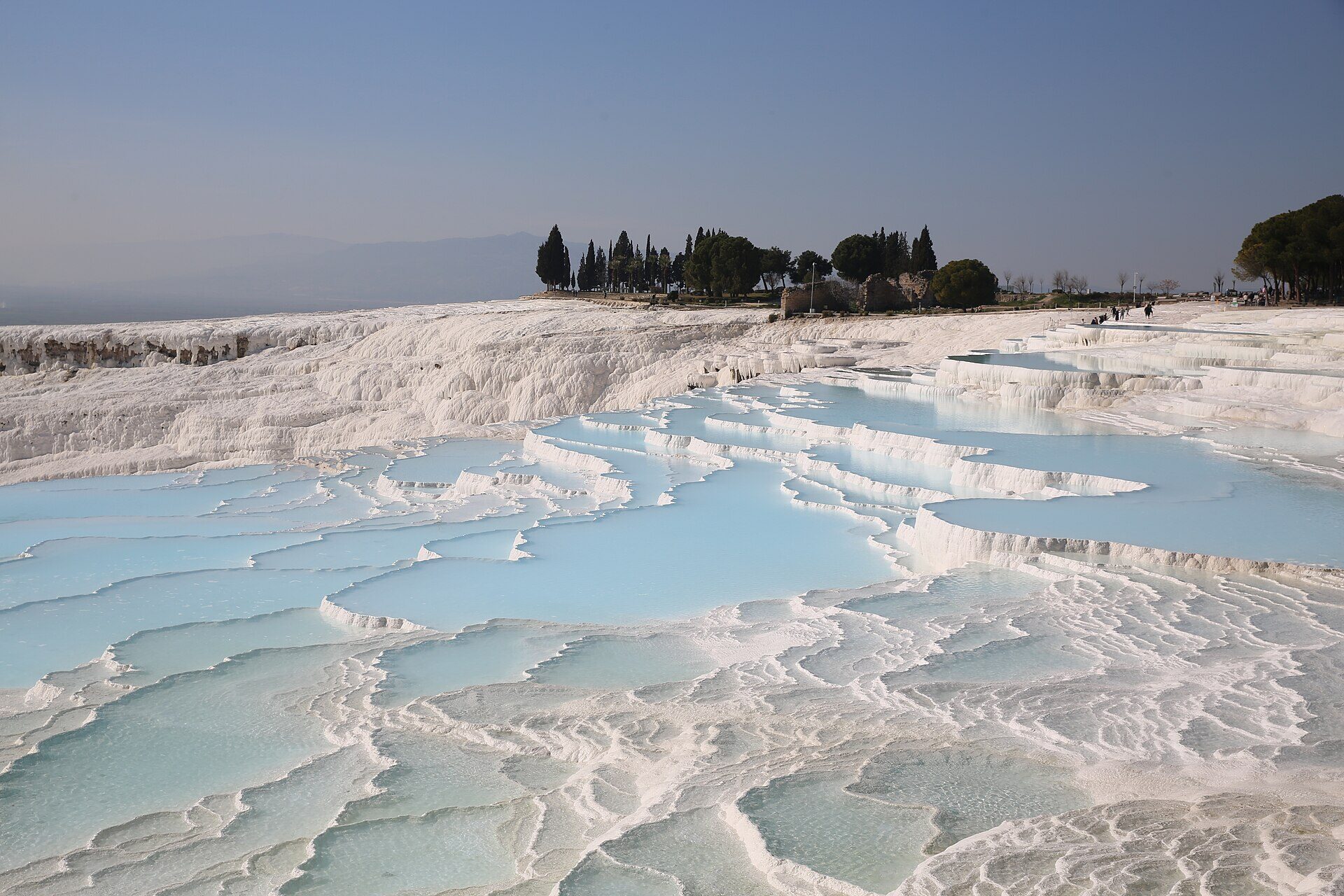
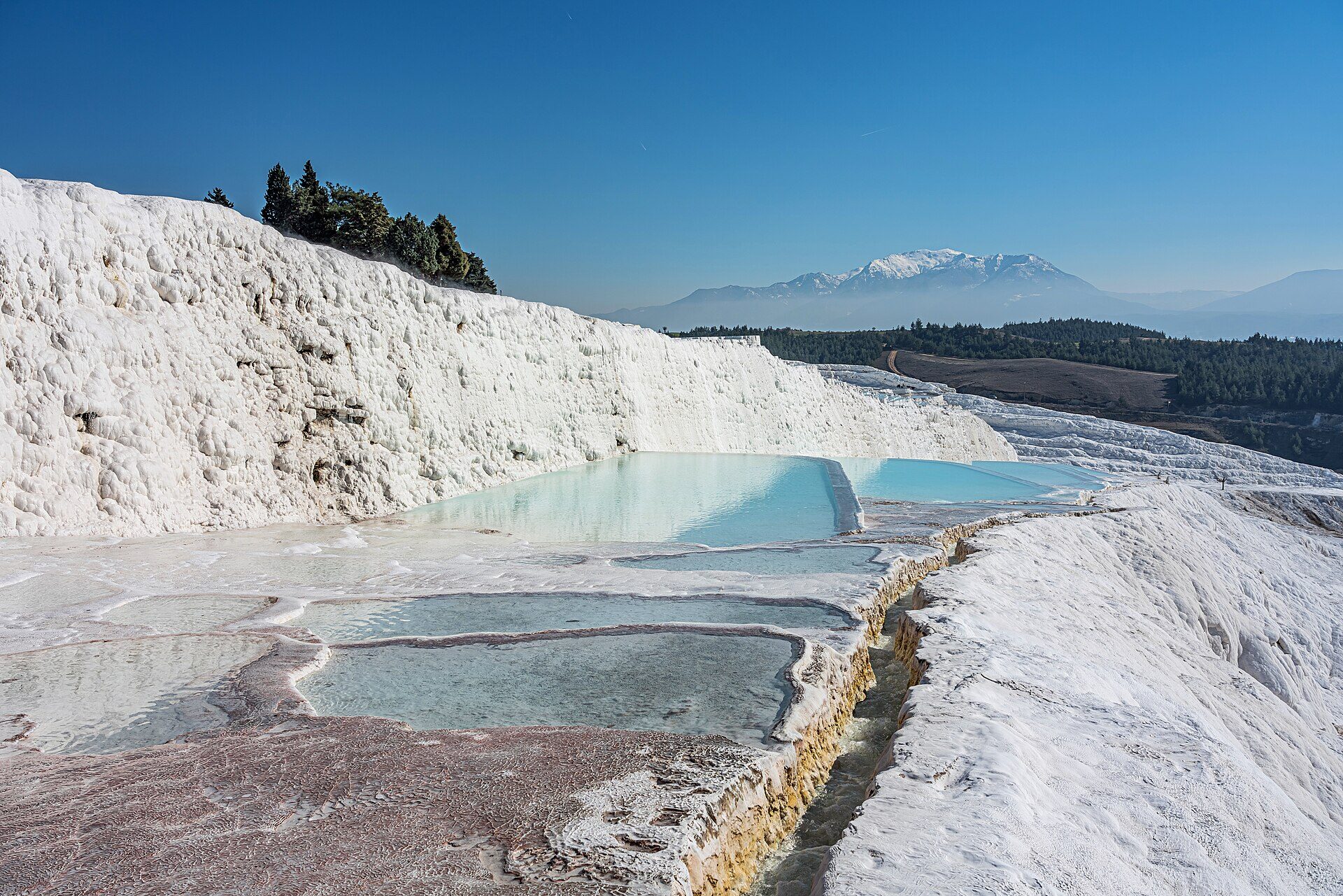
Pamukkale, 'Cotton Castle' in Turkish, is one of Turkey's most distinctive natural sites: a hillside of brilliant white calcium carbonate terraces formed over millennia by the mineral-rich thermal spring water that flows at 35°C from the plateau above, depositing calcium carbonate as it cools and cascades down the white terraces, filling a series of shallow natural pools. The terraces rise about 160 metres above the surrounding plain, their white surface visible from many kilometres away, and the thermal pools, turquoise against the white calcium, are open for bathing (without footwear) on designated sections of the terrace.
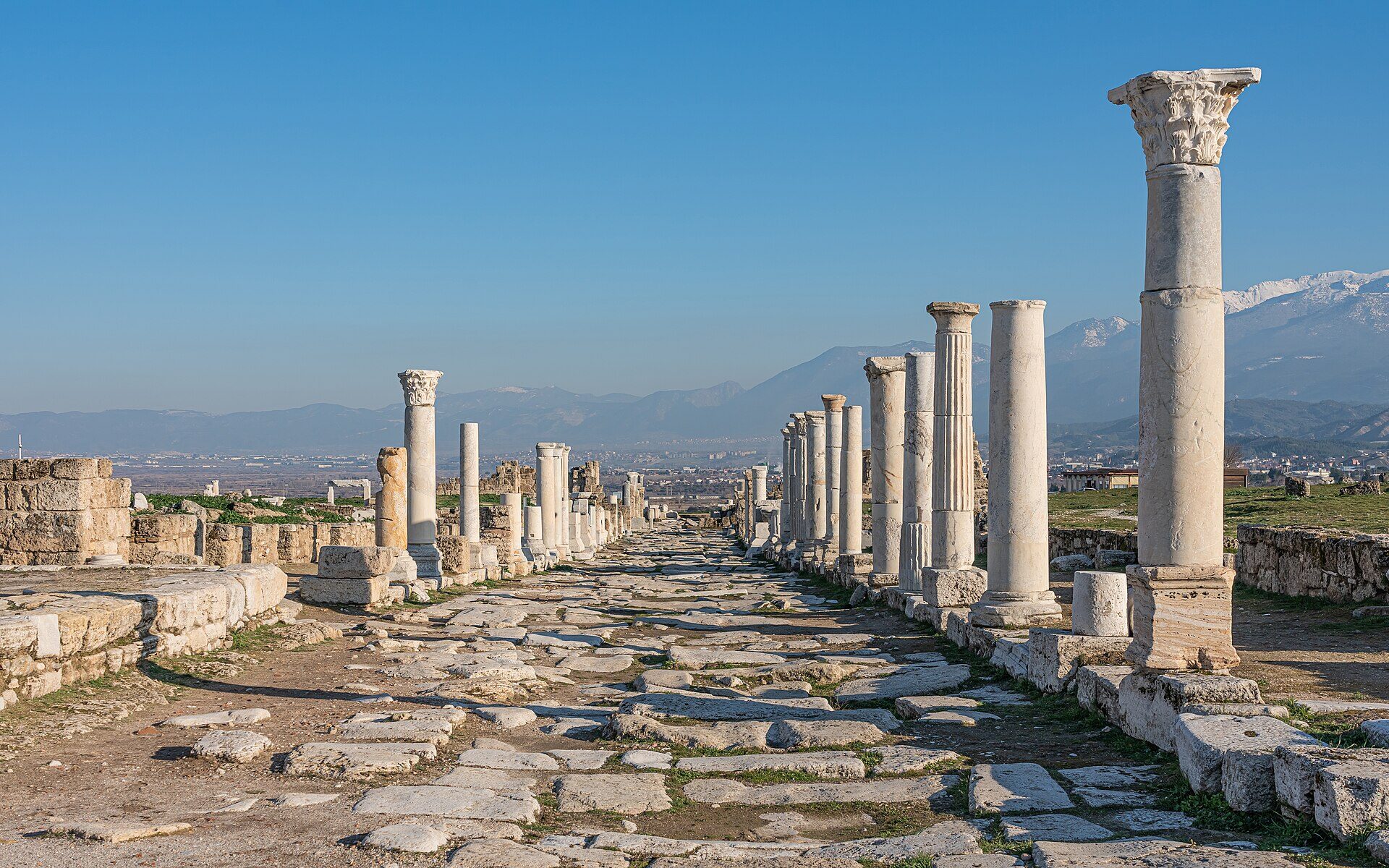
Also, the ancient city of Hierapolis (UNESCO World Heritage Site with Pamukkale) spreads across the plateau above the travertines. Moreover, the necropolis at the northern edge is the largest ancient Roman cemetery in Anatolia, hundreds of sarcophagi of varying elaborateness line the road for 2km, their inscriptions recording the names, professions and social positions of Hierapolis's ancient citizens across three centuries of Roman rule. Besides, the theatre, one of the best-preserved in Asia Minor, seats about 15,000 spectators and retains much of its stage building and decorative sculpted frieze. Besides, the Plutonium, a cave from which poisonous carbon dioxide gases emerged, where ancient priests demonstrated their apparent immunity to death, is one of the most atmospheric archaeological sites in Turkey.
Antique Pool
Besides, the Antique Pool (Kleopatra's Pool, entry about TRY 200) is a unique experience: a thermal pool of 36°C spring water in which ancient columns and capitals, toppled by earthquakes, lie on the sandy bottom. Swimming among first-century AD Roman marble in warm carbonated mineral water is a combination available nowhere else in the world. The pool has a visitor limit, book entry in advance during peak season.
Hierapolis Archaeology Museum
Besides, the Hierapolis Archaeology Museum, housed in the restored Roman baths adjacent to the theatre (included in the site entry), contains the finest collection of sculptural reliefs from the Hierapolis theatre, sarcophagus carvings of rare quality, and artefacts documenting the city's daily life across seven centuries. Also, the carved friezes from the theatre stage building are among the best Roman-era sculptural works accessible to visitors in Turkey outside of the Istanbul Archaeological Museum.
The best time to visit Pamukkale is early morning (before 9 AM when coach tours arrive from Kuşadası and Bodrum) or late afternoon (after 4 PM). Walking the travertines requires bare feet, shoes must be removed at the entrance. The white calcium surface is slippery in places and the sun reflection intense at midday. Hat and sun protection are essential. Pamukkale village at the base of the travertines makes a good overnight base, with thermal spa hotels allowing guests to bathe in geothermally heated pools.
The site is 20km north of Denizli, accessible by direct bus from Denizli otogar. This is served by buses from Istanbul, Izmir and Ankara. The combination of the travertine bathing, the Hierapolis ruins and the Antique Pool gives a remarkably complete experience of both the natural and cultural significance of this rare site.
Roman baths complex
Also, the Roman baths complex at Hierapolis (now the archaeology museum) gives the clearest architectural picture of Roman bathing culture outside Italy, the frigidarium (cold room), tepidarium (warm room) and caldarium (hot room) sequence is legible in the preserved ruins, and the museum's collection of sarcophagus reliefs and theatrical frieze sculptures is one of the best assemblies of Roman decorative sculpture in western Turkey. Moreover, the road from the northern gate of Hierapolis to the theatre (about 1km) passes the nymphaeum (monumental fountain), the colonnade of the main street and the best-preserved section of the Roman city walls.
In fact, the Frontinus Gate at the northern entrance of the ancient city, flanked by towers and named for the Roman proconsul Sextus Julius Frontinus who enlarged it in 84 AD, is the finest surviving Roman gateway in the Pamukkale area and rewards the 20-minute walk north from the travertines. Allow a full day to combine the travertine bathing, the Antique Pool swim, the museum and a proper walk through the Hierapolis ruins, attempting these in a 3-hour coach tour visit noticeably underserves what the site offers.
Pamukkale tickets and prices
Here is what a visit to Pamukkale costs. Prices are per person unless noted. Because they change with the season, treat them as a guide.
| Ticket or service | Price |
|---|---|
| Pamukkale & Hierapolis Entry (Combined ticket · Both entrances · UNESCO site) | TRY 600–900 |
| Antique Pool (Cleopatra's Pool) (Additional ticket · 36°C thermal water · Roman columns) | TRY 400–500 extra |
| Ticket or service | Price |
|---|---|
| Entry (same for all nationalities) (No resident discount on standard tickets) | TRY 600–900 |
| Ticket or service | Price |
|---|---|
| Taxi from Denizli to Pamukkale (20 minutes · Negotiate return trip) | TRY 200–400 |
| Dinner in Pamukkale village (Local Turkish restaurant · View of lit terraces) | TRY 200–400/head |
ℹ Prices in Turkish Lira (TRY) . Confirm rates before visiting.
How to get to Pamukkale
These are the easiest ways to reach Pamukkale, with typical costs and times.
Fly Istanbul → Denizli (DNZ)
Turkish Airlines and Pegasus to Denizli Çardak Airport. Taxi or dolmuş to Pamukkale village (20 min, TRY 200–400).
Overnight bus from Istanbul
Comfortable coach services from Istanbul Esenler terminal to Denizli/Pamukkale. Arrive morning for a full day at the terraces.
Bus from Izmir or Selçuk
Direct buses from Izmir Otogar to Denizli, then local transfer to Pamukkale. Combines naturally with Ephesus visit.
Best time to visit Pamukkale
The best time to visit Pamukkale is April to May and September to October. November to March also work well if your dates are fixed.
- Jan
- Feb
- Mar
- Apr
- May
- Jun
- Jul
- Aug
- Sep
- Oct
- Nov
- Dec
BestGoodFairAvoid
(Apr–May, Sep–Oct) · Good (Nov–Mar) · OK (Jul–Aug: very hot)
Tips for visiting Pamukkale
These tips make a visit to Pamukkale easier, especially if it is your first time.
Visit Terraces Late Afternoon
The white travertine terraces photograph best in the hour before sunset when they glow orange-pink in the low light. Plan to be on the terraces 90 minutes before sunset.
Remove Shoes Early — Carry Them
Shoes must be left at the terrace entrance. Carry them in a plastic bag (provided or bring your own). Shoe theft has been reported, do not leave them unattended.
Swim in the Antique Pool
The Antique Pool, 36°C thermal water with Roman column fragments on the floor, is the best bathing experience in Turkey. Besides, the extra TRY 400 is absolutely worthwhile. Go in the morning when the pool is least crowded.
Stay Overnight in Pamukkale Village
The terraces are lit at night and Pamukkale village empties of day-trippers after 6 PM. Staying overnight means the morning terraces are virtually empty.
Hierapolis Necropolis at Dawn
The Hierapolis necropolis, the largest Roman cemetery in Anatolia, with 1,200 tombs along 2km of road, is rare at first light. Walk north from the site entrance at 8 AM.
Hydrate — UV Reflects Off the White
The white calcium terraces reflect intense sunlight from all directions simultaneously. Sunburn risk is far higher here than at a normal outdoor site. Wear SPF50, a hat and drink plenty of water.
Where to stay near Pamukkale
If you want to stay close to Pamukkale, start with these hotels. Rates are rough nightly guides, so check before you book.
Hal-Tur Hotel Pamukkale ★★★★
TRY 3,000–6,000/nightPamukkale village, 10 min walk to terraces
Best hotel in Pamukkale village, thermal water pool, comfortable rooms, excellent breakfast and rooftop views of the lit terraces at night.
Venus Hotel Pamukkale ★★★
TRY 2,000–4,000/nightPamukkale village centre
Popular with international visitors, thermal pool, good service and a terrace restaurant with sunset views of the travertines.
Melrose House Hotel ★★★
TRY 1,500–3,000/nightPamukkale village
Budget-friendly with thermal dip pool and clean rooms. Excellent value for overnight visitors who want the empty-terrace morning experience.
Denizli Hilton ★★★★★
TRY 4,000–9,000/nightDenizli city, 25km from terraces
Full-service international hotel in Denizli city. Free shuttle to Pamukkale available.
Colossae Thermal Hotel ★★★★
TRY 2,500–5,000/nightNear Pamukkale, 3km from terraces
Thermal spa resort with indoor and outdoor pools and multiple restaurants. Best for combining sightseeing with spa relaxation.
Sura Hotel Sultanahmet ★★★★
$100–200/nightIstanbul (if combining trip)
For those combining Istanbul with Pamukkale, a reliable Sultanahmet base for the Istanbul leg of the journey.
Pamukkale: frequently asked questions
How much does it cost to visit Pamukkale?
Prices for Pamukkale start from TRY 600–900 + TRY 400–500 Antique Pool. Pamukkale & Hierapolis Entry: TRY 600–900; Antique Pool (Cleopatra's Pool): TRY 400–500 extra. Also, booking online is usually cheaper than paying at the gate.
Can you swim in the Pamukkale terraces?
Swimming in certain designated pools on the terraces is permitted. The most famous swimming experience is the Antique Pool (Cleopatra's Pool) inside the Hierapolis archaeological site, where thermal water at 36°C flows over submerged Roman columns. Entry TRY 400–500 in addition to the main site ticket.
What are the opening hours?
Open from sunrise to sunset. Moreover, late afternoon (4–6 PM) offers the best light and the most characteristic photographs, the white terraces glow orange-pink at sunset. Hierapolis ruins are best explored in the morning before heat builds.
How do I get to Pamukkale?
From Istanbul, fly to Denizli Airport (DNZ), 1 hour from TRY 400–700, then a 20-minute taxi to Pamukkale village. Overnight buses from Istanbul (9–10 hours, TRY 400–600) are comfortable. Also, from Izmir, a direct bus takes 3 hours.
Do I need to remove shoes on the terraces?
Yes, shoes must be removed when walking on the white travertine terraces to protect the calcium carbonate formations. Bare feet on the wet terraces in summer is comfortable.
When is the best time to visit Pamukkale?
The best time to visit Pamukkale is April to May and September to October. November to March also work well if your dates are fixed.
Updated October 2026. Prices and opening hours change, so check the official website or the official Turkey tourism site before you travel. Spotted a mistake? Tell us and we will fix it.
Photos: Biologg / CC BY-SA 4.0 via Wikimedia Commons; A.Savin / FAL via Wikimedia Commons; A.Savin / FAL via Wikimedia Commons; Slyronit / CC BY-SA 4.0 via Wikimedia Commons.