 Thailand
Thinking about visiting Doi Suthep temple? Wat Phra That Doi Suthep is a Buddhist temple on a 1,676m peak above Chiang Mai, containing a magnificent gilded chedi housing a relic of the Buddha. The most sacred temple in northern Thailand. This guide covers what it costs, opening hours, the best months to go, how to get there and practical tips.
At a glance
- Entry
- THB 30 foreign visitors · Free Thai nationals
- Opening hours
- 5 AM – 6 PM daily
- Best time
- March to May and November to December
- Location
- Doi Suthep-Pui National Park, 15km from Chiang Mai
What to expect at Doi Suthep
Wat Phra That Doi Suthep is the most sacred temple in northern Thailand, a Buddhist complex on a 1,676-metre peak above Chiang Mai, reached by a 309-step staircase flanked by multi-headed naga serpents, where the central gilded chedi (stupa) houses a relic of the Buddha brought to this location by a white elephant that, according to the founding legend of the temple, walked from Chiang Mai in 1383, climbed the mountain, circled the summit three times and then died, indicating to King Ku Na of Lanna that this was the divinely chosen location for a temple of the highest significance.
The temple has been the most important pilgrimage site in northern Thailand for over 600 years and remains an active place of worship and merit-making visited daily by Thai Buddhists from across the north.
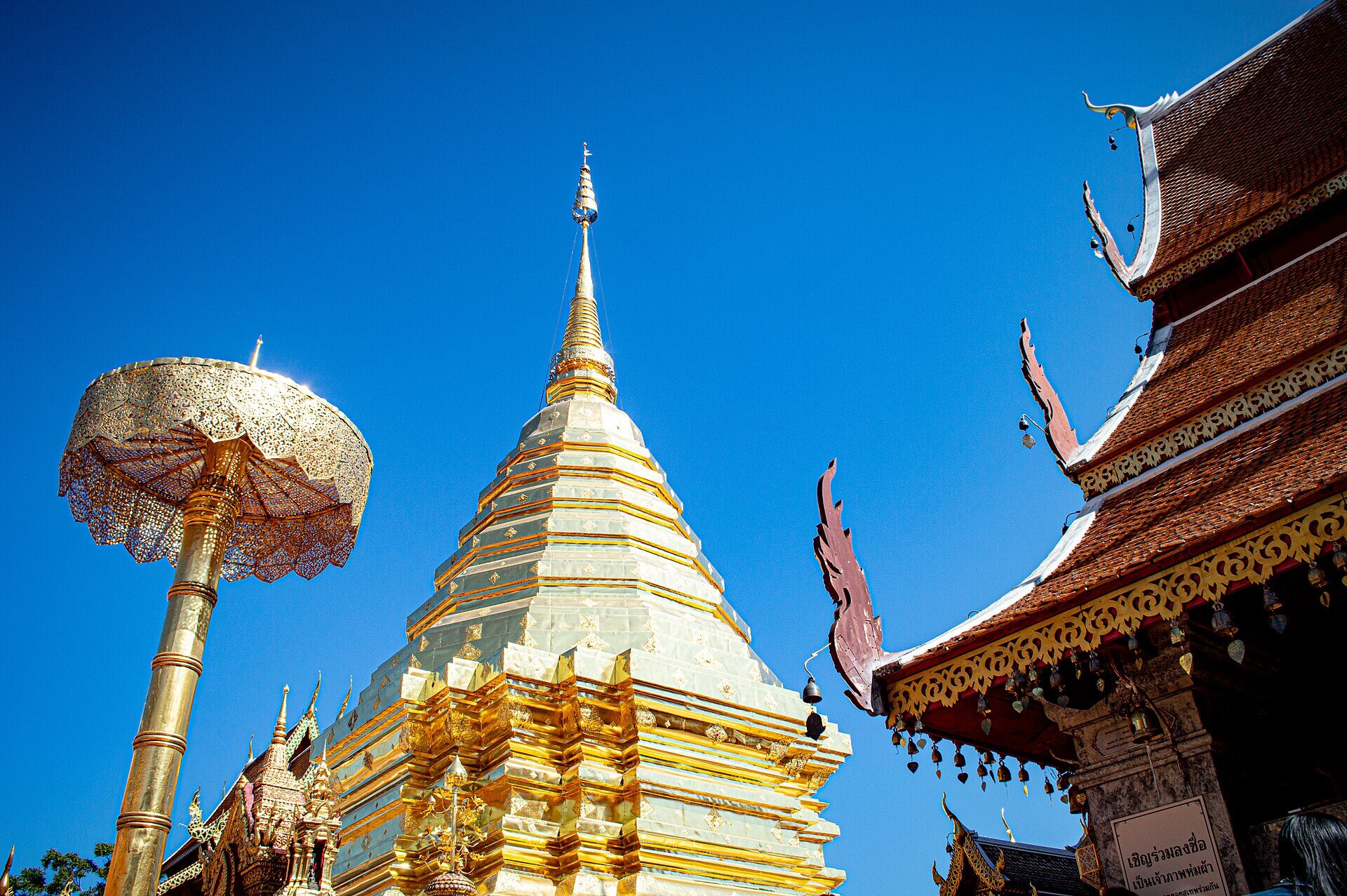
Central chedi
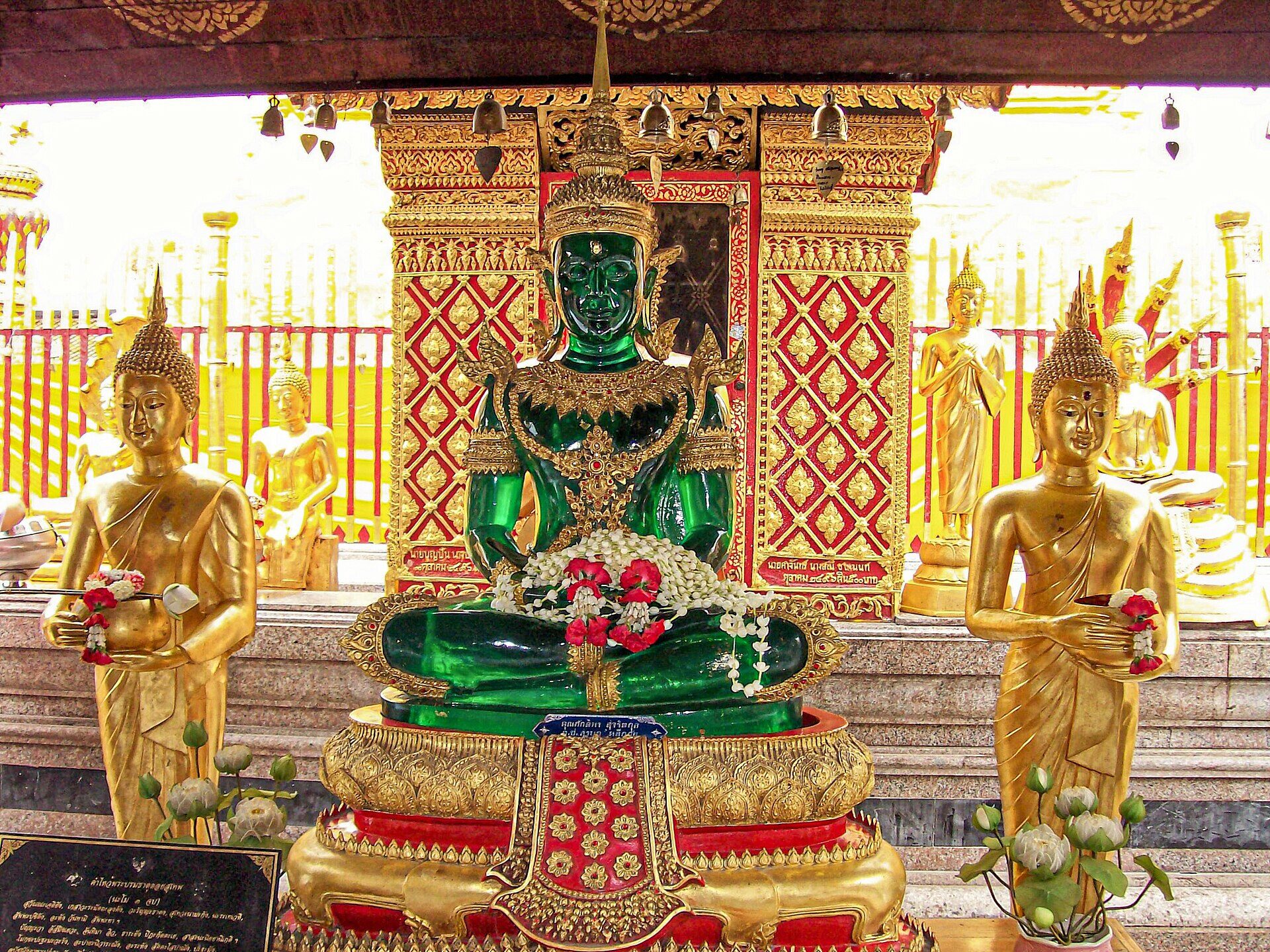
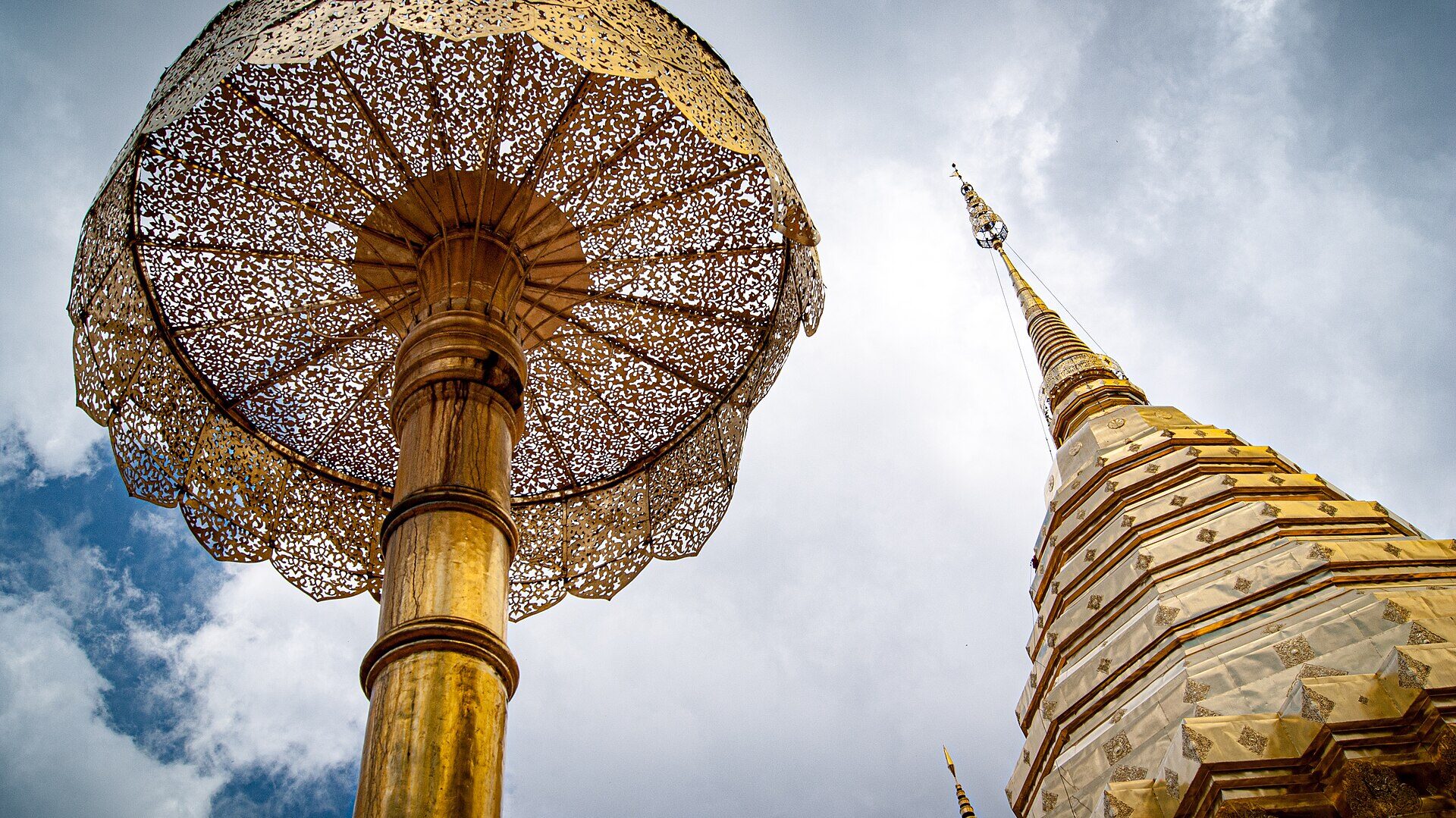
In general, the central chedi, a bell-shaped golden stupa about 22 metres tall, covered in gilded copper plates and surrounded by golden umbrellas, is the visual and spiritual heart of the complex. In addition, the relic believed to be housed within it (a bone fragment of the Buddha, sent from Sukhothai to the Lanna kingdom in the 14th century) gives the chedi the status of a full sacred Buddhist monument equivalent in Thai Buddhist theology to the bodily presence of the Buddha himself.
The ritual of circumambulation, walking clockwise around the chedi three times while maintaining mindfulness, is performed by Thai pilgrims throughout the day and gives visitors the opportunity to participate in living Buddhist practice rather than merely observing historical architecture.
Panoramic view
In general, the panoramic view from the temple terrace, Chiang Mai laid out on the plain 1,000 metres below, the surrounding mountains of the Northern Thai ranges, the Mae Ping River valley visible on clear days and on exceptional mornings the distant peaks of the Thai-Myanmar border range, is the finest accessible elevated viewpoint in northern Thailand. Generally, the quality of the view varies noticeably by time and season. November through February gives the clearest conditions, the cool dry air allowing the greatest visibility. The morning haze that builds after about 9 AM progressively obscures the view throughout the rest of the day, making the pre-dawn to 8 AM window the optimal visiting time for the panorama.
The approach to Doi Suthep matters as much as the destination. Besides, the Naga staircase, the 309-step stone staircase with its elaborate seven-headed serpent (naga) balustrades on both sides, the nagas' scales painted gold and their open mouths facing the visitor's arrival, is the traditional pilgrimage approach to the temple and carries real religious significance for Thai Buddhists: climbing the steps is an act of merit-making, the effort of the ascent understood as part of the devotional practice. A funicular (THB 20) is available at the base of the staircase for those unable to climb, but the staircase experience, the nagas as guardians of the sacred space above, the view opening progressively behind you as you climb, is irreplaceable.
Practical notes
The temple complex includes several buildings beyond the central chedi of architectural and artistic interest. In addition, the Wihan (assembly hall) contains a bronze Buddha image of the 15th century in the attitude of dispelling fear, surrounded by elaborate gilt woodcarving. Also, the Belfry, containing a large bell struck by visiting pilgrims, and the numerous smaller shrine buildings around the courtyard contain Buddha images in various attitudes from multiple periods of Lanna Buddhist art history. In fact, the royal insignia building displays the ceremonial regalia and photographs related to the royal family's connections to the temple, which is designated as a royal temple of the highest class.
The practical approach: songthaew (red shared truck-taxis, THB 50–60 per person) depart from Chang Pheuak Gate (the north gate of the Old City moat) when full, typically within 10–20 minutes of a sufficient number of passengers gathering. Generally, the journey takes about 30 minutes up the winding mountain road. Private Grab taxis (THB 150–200 return with waiting time) are a more flexible alternative. The temple is open from 5 AM, a dawn visit, with Chiang Mai in the valley below emerging from morning mist and the temple's golden chedi catching the first light, is the finest single experience available at Doi Suthep and worth the early departure from any Chiang Mai hotel.
Doi Suthep tickets and prices
Here is what a visit to Doi Suthep temple costs. Prices are per person unless noted. Because they change with the season, treat them as a guide.
| Ticket or service | Price |
|---|---|
| Doi Suthep entry (foreign visitors) (Open 5 AM–6 PM daily) | THB 30 |
| Funicular (alternative to stairs) (309 steps or funicular · Both access same temple) | THB 20 |
| Ticket or service | Price |
|---|---|
| Thai nationals (Free entry) | Free |
| Ticket or service | Price |
|---|---|
| Songthaew from Chang Pheuak Gate (Shared red truck-taxi · 30 min · Most practical) | THB 50–60 pp |
| Doi Inthanon National Park (same day) (Thailand's highest peak · 2,565m · 80km from city) | THB 300 entry |
ℹ Prices in Thai Baht (THB) . Confirm rates before visiting.
How to get to Doi Suthep
These are the easiest ways to reach Doi Suthep temple, with typical costs and times.
Songthaew from Chang Pheuak Gate
Red songthaew pick up passengers at Chang Pheuak Gate (north gate of Old City). Depart when full or negotiate private trip (THB 150).
Taxi/Grab from Old City
Private Grab or taxi for flexibility. Include waiting time in negotiation.
Best time to visit Doi Suthep
The best time to visit Doi Suthep temple is March to May and November to December.
- Jan
- Feb
- Mar
- Apr
- May
- Jun
- Jul
- Aug
- Sep
- Oct
- Nov
- Dec
BestGoodFairAvoid
(Nov–Apr: dry season, clear mountain views) · Good · OK (May–Oct: rainy, hazy views)
Tips for visiting Doi Suthep
These tips make a visit to Doi Suthep temple easier, especially if it is your first time.
Go at Sunrise for Clearest Views
Doi Suthep opens at 5 AM. The pre-dawn period and first hour of sunrise have the clearest panorama of Chiang Mai below, later morning haze obscures the view. A 5 AM visit also means experiencing monk prayers and merit-making in silence.
Climb the Naga Staircase, Not the Funicular
The 309-step Naga staircase, flanked by 16-headed serpent (naga) balustrades, is the traditional approach and a real merit-making act for Thai Buddhists. Worth climbing even in the heat. In addition, the funicular removes much of the meaning.
Modest Dress Required
As a sacred Buddhist temple, shoulders and knees must be covered. Sarongs are available to borrow at the entrance.
Combine with Doi Inthanon Park
Doi Inthanon National Park (Thailand's highest peak, 2,565m) is 80km from Chiang Mai, combine with Doi Suthep morning for a full mountain day. Besides, the cloud forest near the summit is striking.
Best in February During Flower Festival
Chiang Mai's Flower Festival (first weekend of February) coincides with cool season clarity, Doi Suthep framed in blooming cherry blossoms and the flower-decorated floats in the city below.
Khao Soi Lunch in Chiang Mai After
Return to the Old City for khao soi, Chiang Mai's signature dish: a coconut curry noodle soup of striking complexity, available from THB 50 at any local restaurant. Impossible to leave Chiang Mai without eating it.
Where to stay near Doi Suthep
If you want to stay close to Doi Suthep temple, start with these hotels. Rates are rough nightly guides, so check before you book.
Mandarin Oriental Bangkok ★★★★★
THB 15,000–35,000/nightChao Phraya River, Old Bangkok
One of Asia's legendary hotels, 150 years on the Chao Phraya, striking service and the most atmospheric location in Bangkok. In addition, the Authors' Wing bar is unmissable.
137 Pillars House (Chiang Mai) ★★★★★
THB 12,000–25,000/nightChiang Mai Old City
Best boutique in Chiang Mai, a restored 1889 teak mansion with 30 suites, striking pool and the best breakfast in northern Thailand.
Ibis Bangkok Riverside ★★★
THB 1,500–3,000/nightChao Phraya, Free shuttle boat
Best value Bangkok hotel with Chao Phraya location. Free shuttle boat to Sathorn Pier and easy access to all main sights.
Zarin Hotel, Chiang Mai ★★★
THB 800–2,000/nightOld City, 5 min to Night Bazaar
Excellent value in Chiang Mai Old City. Clean, friendly and perfect location for temples and the night market.
Novotel Bangkok Sukhumvit ★★★★
THB 3,500–7,000/nightSukhumvit BTS, Central Bangkok
Reliable international 4-star on Bangkok's best transport corridor. Pool, breakfast and immediate BTS access.
Doi Suthep: frequently asked questions
How much is Doi Suthep?
THB 30 (about USD 0.85) for foreign visitors. Open 5 AM–6 PM daily.
How do I get to Doi Suthep?
Songthaew (red shared truck-taxi) from Chang Pheuak Gate or Chiang Mai Zoo parking lot, THB 50–60 per person each way. Private taxi: THB 150–200 return. Besides, the temple is 15km and 30 minutes from Chiang Mai Old City.
How many steps?
309 steps up the Naga-flanked staircase from the base of the mountain to the temple. The staircase is steep but covers about 290 metres of distance, most visitors complete it in 10–15 minutes. Also, a funicular (THB 20) is available for those who prefer not to climb.
What is the best time to visit?
Sunrise (temple opens 5 AM) for the clearest panorama before morning haze builds. Early morning also has the most atmospheric merit-making activity from local Buddhist devotees.
What are the opening hours of Doi Suthep temple?
Doi Suthep is open 5 AM – 6 PM daily. Hours can change on public holidays, so check before you travel.
Updated October 2026. Prices and opening hours change, so check the official website or the official Thailand tourism site before you travel. Spotted a mistake? Tell us and we will fix it.
Photos: Yimsurawut / CC BY-SA 3.0 via Wikimedia Commons; Philip Nalangan / CC BY 4.0 via Wikimedia Commons; Philip Nalangan / CC BY 4.0 via Wikimedia Commons; Philip Nalangan / CC BY 4.0 via Wikimedia Commons.